Luckyscent
Fragrance X
Indiescents
First in Fragrance
99Perfume
ExcelsisUSA
Parfum1
My Photo
Name:
Location: New York, NY
© Copyright 2005-2011 Perfume-Smellin' Things
All rights reserved
Custom Search

Wednesday, December 22, 2010

In Which I Nearly Have an Opinion (L'Artisan Parfumeur Nuit de Tubereuse)


By Marina

Steve (to Patrick about some fabric samples): You have an opinion yet?
Patrick: Nope! Nothing! Keep trying to have an opinion but nothing happens in my head.
(...)
Steve: Well?
Jeff: I nearly had an opinion about that one.
Steve: What was it?
Jeff: It's got a lot of lines.
Steve: OK. What do you think about that?
Jeff: I don't know.
Coupling, Season 2, Her Best Friend's Bottom

I don't often suffer from a lack of opinions when it comes to perfume. And I basically invariably "get" Duchaufours work. So I can't really explain why I "keep trying to have an opinion" about Nuit de Tubereuse "but nothing happens in my head." Here is what I've been able to scrape up:

- It is Strange-but-Wearable, which is one of the qualities in fragrance that creates perfume fanatics out of regular people. Have it not been for a couple of L'Artisans and Lutenses way back when, I probably wouldn't have been doing what I do now. (Have it not been for a couple of timeless and impeccable Chanels and Guerlains, I wouldn't have been doing what I do either, classic perfection is after all as fascinating as contemporary/niche oddness...but I digress). The fragrance is a rather bizarre-yet-harmonious, jolie laide mix of tuberose, mango and rubber, a unique take on tuberose ...And so, as Robin said, "Nuit de Tubéreuse is exactly the sort of perfume that keeps me blogging."

- It is a unique, but true take on tuberose. Both the fruity (in this case, mango instead of the usual coconut, but this is where uniqueness comes into play) and the rubbery facets of tuberose are highlighted to perfection.

- It is a vivid perfume, I see it in color, which for me, as a visual person, is a big deal. To be precise, I see it as hot pink.

- It is a very "Duchaufour" fragrance, which is a plus in and of itself, and also I appreciate when a perfumer's signature is perceptible in his or her work. All that extravagant, exuberant, pink voluptuousness rests on Duchaufour's trademark dry, earthy-resinous base. The contrast of the two is very appealing; I like a good contrast in perfume.

-It is different enough from L'Artisan's old Tubereuse, which is all tuberose and no quirks (speaking of classic perfection...) to justify having both in the line. There is also La Chasse Aux Papillons Extreme, but one tends to forget about that one.

That said...I still don't really know what I think about all that...I missed a chance to wear the scent in the heat of summer, which is when big florals bloom on me, so maybe I'll form an opinion next year.

What do you think of Nuit de Tubereuse?

Available wherever L'Artisan is sold, $115.00-$155.00.
Image source, L'Artisa Parfumeur.

Labels: , ,

Wednesday, December 08, 2010

L'Artisan Parfumeur Al Oudh

By Marina

A darker and, arguably, more broodingly handsome cousin of Eau d'Italie's Bois d'Ombrie and Baume du Doge, Al Oudh has inherited the same dusty date note as the former and raw earthiness of saffron as the latter. (Funny that this new L'Artisan creation of Duchaufour's makes me think of his Eau d'Italie scents, not L'Artisans.) What sets Al Oudh apart from the relatives at Hotel le Sirenuse are, yes, oud and cumin.

When I first started on the path of perfume obsession way back when (a long time ago, it feels, when dinosaurs lived with man and died in the flood) there existed such a fairly widespread phenomenon as cuminophobia. Perhaps, fragrance lovers nowadays aren't scared by the sweet sweatiness of the note, but I feel the warning is in order just in case: the warm, velvety stinkiness of cumin dominates the first half of Al Oudh's development and is mighty perceptible in the second half. To the point where one might ask, where is oud? Oud does emerge towards the end but it is ... Duchaufour's take on the note. It is dense and strangely airy at the same time and smoky in a paradoxically transparent sort of way ...a thin strip of smoke coming out of a dry gray pebble...this is an image I see when I smell the oud and incense notes of this fragrance.

But I digress from the star note of the blend, the cumin. Accompanied by a soupçon of cardamom, quite a bit of vanilla and the aforementioned dates, it is creamy and rich. One doesn't know whether to hunger after its deliciousness or to be perversely titillated by its dirtiness. In other words, it's how a cumin accord should be done. As for oud...this is not an oud perfume for the oud purists, but one for the fans of Duchaufour's talent for modern and unique interpretation of traditional ingredients and popular inspirations.

Available wherever L'Artisan is sold, $155 for 100ml.

Labels: , , ,

Tuesday, May 04, 2010

Nuit de Tubereuse by L’Artisan Parfumeur : Cyborg Love (and a prize draw)

By Marla

I move a little slowly when it comes to modern culture. I only just viewed Bjork’s haunting short film, “All is Full of Love” a week ago, and I was testing some of L’Artisan Parfumeur’s new “Nuit de Tubereuse” at the same time. I loved the icy tenderness of the film, and it seems to me that Bjork’s commentaries on modern communication and communion continue and expand Laurie Anderson’s multi-faceted musings on the same subjects. The images of twin cyborgs passionately embracing is both frightening and compelling. So how does this new perfume by Bertrand Duchaufour ally with cyborg love?

I hate tuberose absolute. I hate tuberose perfumes. I find them revolting. I love sniffing the actual flower, however, as it has a sort of attraction/repulsion gumbo of scent molecules that is quite intoxicating in a garden, out in the fresh air and sunshine. But in a perfume? Eek. I never want to smell like that.

“Nuit de Tubereuse” is a departure from the usual in that it basically abandons lactones and indoles. Its sharp, nose-searing opening is neon and electric rather than tropical, rotting, and indolent. It smells cold, alien, and strange. Yes, it’s floral, tuberose and orange blossom are there, but perversely so, as if a computer geek had composed binary flowers for a decoration in his holo-lab. There’s no distinctive drydown per se, though there are shifts in orientation over the hours. But, like holograms, these various facets remain unnatural, and thoroughly otherworldly. Longevity and sillage are both impressive. There is no doubt in my mind what the two cyborgs in Bjork’s film smell like, and it’s both attractive and frightening to me. If you would like to try it for yourself, please leave a comment, I’ll pick a winner at random and send a sample. The draw is closed.

(Full disclosure: I received my “Nuit de Tubereuse” from L’Artisan Parfumeur as a gift.)

Labels: , , ,

Monday, December 28, 2009

Spice/Chest: L'Artisan Al Oudh

By Tom

Oudh (or Aoud, or Oud or however it's spelled) is a note that I have learned to really love. Through Kelley I've discovered Montale and through Marina I've discovered the wildly priced Arabian Oud line. This year seems to be the Year of Oud in niche: everyone from Tom Ford to Le Labo has one.

Created by Berntrand Duchaufour, Al Oudh could almost be accused of false advertising. Patty at Perfume Posse described it as "sweaty armpit" while Robin at NST calls it a "bold, very enjoyable outing". I get a boatload of cumin. Cumin, cumin and citrus opening, cumin, cumin, cumin and oud with roses middle and cumin, cumin, cumin, cumin, vanilla, civet and cumin drydown. (spam, spam, spam, lov-e-ly spam...) I happen to like cumin in scents, even unto Eau d'Hermes and I do like this one. A lot. Despite the cumin-heavy mix it's only really overwhelming in the first half hour: after that it's silky smooth. Unless of course, you don't like cumin. If you dislike that note then I suggest staying well clear: unlike a some L'Artisan scents, this is quite tenacious.

Al Oudh is $155 for 100ML available at the usual suspects. I spritzed at Barneys and asked for and received a sample at ScentBar.

Labels: , , ,

Wednesday, December 02, 2009

Penhaligons's Gardenia: Perfume Review

Four things surprised me about Penhaligon's new rendition of Gardenia, re-introduced this year with the help of Bertrand Duchaufour as part of the Anthology Collection:

1) Its tangy and subtly sweet fruitiness, which I first imagined to be alike freshly cut green apples, but then, looking at the list of notes recognized as the result of mixing the fruity magnolia and the tart rhubarb;

2) Its natural, simple feel. By "natural" I mean the impression that all ingredients (simplistically speaking) had been picked in an unkempt, windswept little garden and put together in a pretty and unassuming fashion, miraculously, right there on an old wooden kitchen table...and not in a big fancy lab...and put together in a "simple" manner like a talented child's naturemort done in transluscent, pastel colors;

3)...Paradoxically, after the above statement... its "perfumey" and classic quality, which somehow goes alongside the simple naturalness from about 1/3 into the composition, when orange blossom and jasmine start to kick in, and intensifies with the appearance of tuberose and musk;

4) The fact that it does not smell very gardenia-like...Which, I suppose isn't that much of a surprise, since not too many gardenia perfumes do.

None of these observations are meant as criticism. I find the verdant fruitiness unexpected and appealing; the pastel naturalness of the blend makes me nostalgic for the dacha of my childhood; the perfumey-ness brings the lady-like refinement which I always appreciate, and as for being true to the smell of gardenia...oh well! I already have Lauder's Tuberose Gardenia and Ford's Velvet Gardenia. As a side note, I do not remember the 1976 Penhaligon's Gardenia, so I can't compare. The 2009 is pretty, oh so pretty- the kind of slightly fresh, girly-feminine, genteel, almost "weddingy" (yes, that is a specific quality in a scent) blend that I have been in a mood for for awhile.

Available at penhaligons.co.uk, £95.00 for 100ml.

Image credits, Tim Walker, Penhaligon's.

Labels: , , ,

Friday, August 28, 2009

L'Artisan Parfumeur Havana Vanille: Perfume Review

If I were to come up with a two-word description for Havana Vanille à la Perfumes: The Guide, I would have opted for strange vanilla or raw vanilla or bearded vanilla or thinking person's vanilla (OK, that's three words). Which is to say that I think that Havana Vanille is odd, it smells raw/rooty/earthy, is not girly by any stretch of imagination and, like most Duchaufour's creations, is cerebral.

I am not sure to which combination of ingredients to attribute the remarkably raw quality of the composition. My guess is that it is immortelle and narcissus which lend Havana Vanille the haunting aroma of something freshly dug out of clean, moist soil...of something "dirty" in a vegetable-mineral, not animalic sense. This raw component is more predominant, on my skin, then the title note of vanilla. The latter is, of course, present at all times, but isn't quite like its usual self. It's not sweet and it's not even abstractly gourmand. The very slightly tarry leather, the smoky woods, the boozy rum note lead to a sort of androgen excess in the vanilla accord. I would not label the scent as "masculine", but neither is it in any way "feminine". Let's call it androgynous.

This might easily be one of the most interesting recent releases and certainly the most unusual vanilla fragrance that I have ever encountered. If I had to compare it to another perfume, I'd say that it vaguely reminds me of Duchaufour's raw masterpiece from last year, Baume du Doge...with a lot of smoky, dirty and drunken vanilla added to the mix.

Havana Vanille is available wherever L'Artisan is sold, $115.00-$155.00; the fragrance has been renamed and is now called Vanille Absolument.

Image credit, Ellen Von Unwerth

Labels: , , , ,

Wednesday, February 18, 2009

Baume du Doge by Eau d'Italie: Perfume Review

Inspired by Venice, once legendary gateway to the Orient with all its exotic spices, Baume du Doge is, not surprisingly, a piquant creation, bursting with the golden tang of saffron and cardamom, smoldering with the crimson fire of cloves.

It is - surprisingly- also a very earthy perfume. And yes, earthy is Duchaufour's forte, but, in my opinion, the raw quality of Baume du Doge surpasses anything else done by him so far. Saffron and, to a lesser degree, cardamom do have a very raw undertone in their spiciness, a dark, soil-like element that naturally contrasts the brightness of the spicy aromas. Nature is a gifted perfumer after all, and loves a good contrast. So really, the earthy aspect of Baume du Doge is only to be expected, especially if you take into account that the blend also includes the earthy-green-aniseedic fennel and earthy-balsamic myrrh. The latter, combined with sweet orange note in the top notes and vanilla in the base, lends a well-rounded, rich, opaque and creamy feeling to Baume de Doge, softens the sharpness of spices, tames the earthy element, bringing the fragrance to the almost-edible, patchouli-like territory and putting a finishing exotic touch on this understatedly oriental tapestry.

The restrained exoticism displayed by Baume du Doge is characteristic to Duchafour's art as is the indescribable, indefinable oddness of the composition. Strangely beautiful or beautifully strange, it has a haunting quality, something that makes you want to keep re-sniffing and analyzing and wondering. A thinking person's perfume.

Available at Lafco and Luckyscent, $130.00 for 100ml.

Image source, krasivoefoto.ru

Labels: , , , ,

Tuesday, November 25, 2008

Where is the Love for Lalique?

By Marla

Lalique sort of snuck up on me. I was predisposed to try a few of the perfumes because of my adoration for its turn-of-the-century glass sculptures, particularly those made of opaline, the milky translucent glass with gold and blue fire swirling within. The House of Lalique was founded by (obviously French) René Jules Lalique (1860-1945) and became one of the most famous design firms of the Art Nouveau movement. In 1907, Francois Coty hired Lalique to create perfume labels, and the bottles a short while after that. Perfumery was never the same.

Almost a century passed before Lalique produced its first fragrance under its own brand name in 1992: Lalique for women (a floriental, now discontinued). Quite a few have premiered in this new century: Faune (2000), Equus (2001), Tendre Kiss (2002), Eau de Lalique (2003), Flora Bella (2005), Lalique Le Parfum (2005), Perles de Lalique (2006), Encre Noire (2006), Amethyst (2007), and Lalique White (2008). They hire well-known noses and utilize more lavish ingredients than most mainstream houses. It’s not necessary to say that the bottles are generally gorgeous.

Without thinking about it much (the nose knows), I ended up with large bottles of Flora Bella, Perles, Amethyst, and Eau de Lalique, and sample vials of Le Parfum and White. The bottles I found were always tucked away in the back of the shop, and the SAs didn’t know anything about them except that, “Lalique is famous for glass.” Okay! Seems to me the House of Lalique is due for a little love. So here are some mini-reviews which I hope will inspire affection for these gems.

Lalique White (made for men- but I like it, too!): Designed by Christine Nagel, notes are tamarind, lemon leaf, bergamot, nutmeg, white pepper, violet, cardamom, amber, musk and cedar. White is truly unisex- it doesn’t seem made for either male or female, but for both, either, whatever. I swear there is a touch of bay in here because it reminds me quite a lot of traditional Caribbean bay rum colognes, which I remember very fondly from my childhood, and which I still believe are one of the finest perfume families out there . The hot/cold spice interplay runs for a good hour or so, and the softer, but still spicy, drydown lasts most of the day. I am impressed, and have run through 2 sample vials in less than a week.

Amethyst: This perfume by Nathalie Lorson, launched in 2007. Head notes of nutmeg, blackberry and blackcurrant, heart notes of rose, pepper, peony, lily and ylang-ylang; the base is a conventional, though cuddly, vanilla musk. The bottle design of purple thorns entwining purple frosted glass is based on a Lalique design from 1920, and it’s gorgeous and goth. The first time I smelled this, in 2007, it smelled somewhat artificial to me, and had a leeetle cough syrup vibe. Then it just disappeared from the shelves, only to reappear a couple months ago. I tried a decant, and this time, a very natural blackcurrant, with not so much floral in the background, greeted my nose. This (I think) reworked version smells like a dacha in summertime now, and reminds me of our marathon black-currant and berry harvests in Ukraine. Yum.

Perles de Lalique- This perfume was launched in 2006 and won a Marie Claire best-perfume award in 2007. Two versions of the bottle exist, both lovely; one was designed for the extrait, and the other for the EdT. The extrait de parfum bottle was inspired by the René Lalique “Cactus” powder bowl of 1928, all feathers and spiky bits. I’ve only seen one in real life and it was stunning, and unfortunately, not for sale. The no-oakmoss chypre inside was designed by Nathalie Lorson. Bulgarian rose and bourbon pepper dominate the scent from start to finish. These two notes are anchored by iris, patchouli, and musk. This one is popular in central Europe. It’s strong, with a powerful sillage. I notice Americans don’t like it much, but it strikes a chord with Europeans in winter. I get cravings for it as soon as the snow falls.

Flora Bella (2005) is my personal favorite by Lalique, no surprise, as it’s composed by my favorite nose, Bertrand Duchaufour. This cold, alien floral has notes of mimosa, carnation, cassie, orchid, freesia, lilac, frangipani and tiare; base notes of spices, amber, helional, vanilla and white musk. This is what I wanted Thierry Mugler’s Alien to smell like- icy, remote, strangely compelling, heartbreakingly beautiful and completely odd. There’s no other floral out there like this, and it’s one of the few florals in my heavy-use collection. It’s also purple, which is nice.

Eau de Lalique is a cold, spicy unisex cologne in the inimitable Ellena abstract watercolor style; it was composed by both JC Ellena and Emilie Copperman in 2003. Head notes are mandarin orange, pimento, bergamot, dill, cardamom and lemon; heart notes are cinnamon, hibiscus and freesia; base notes are sandalwood, musk, benzoin and guaiac. I tend to find colognes rather dull and evanescent, but this one has those peculiar twists and surprises that make Ellena’s best compositions so easy to return to, and so, well, mysterious. It lasts far longer than most colognes as well.

Lalique Le Parfum is a heavy oriental that was designed by Dominique Ropion and launched in 2005. Head notes are bay, bergamot and pink pepper; heart notes are jasmine and heliotrope; base notes are sandalwood, tonka, patchouli and vanilla. I’ve only tried this one once, and it was slammed by Luca Turin/ Tania Sanchez, but I enjoyed it more than they did. Heavy orientals are not my style, but if they were, I’d buy a bottle. Encre Noir is another I’ve only tried once, but the cubic, black bottle is stunning, and it’s one of the best vetivers I’ve tried. Unfortunately, it’s extremely difficult to find.

Eau de Lalique and Flora Bella can be bought for under $20. I’m not kidding. That’s a well-made perfume by very famous perfumers for less than a pre-frozen dinner in most chain restaurants. This is incredible to me, as they are both gorgeous and unique. I pondered the weirdness of this for a while and came to the conclusion that’s it’s the marketing and distribution that’s the problem. I live in both Europe and the US and have never seen an ad for any Lalique fragrance, nor have I seen bottles in many shops. When found in shops, they are skulking about in some dark corner. There are no wild parties for their launches that can be viewed on YouTube (as for the effervescent Gaultier’s MaDame). Yet they are considered too mainstream for many niche perfumeries to carry, so they get no love there, either. I’m just lucky I live near a store that carries them, and that some US online perfumers will sell them for the price of a bag of burgers and fries. I recommend them over the burgers, by the way.

Labels: , , , , ,

Wednesday, August 27, 2008

Perfume Review: Eau d'Italie Magnolia Romana

A single, pale-pink magnolia submerged in a vase full of clear water...aroma of a pale-green stem, of fragile petals, of water itself...a minimalist and touching image...a Japanise silk painting...this, to me, is Magnolia Romana, Bertrand Duchaufour's new creation for Eau d'Italie.

The beginning of the perfume is fresh and slightly herbal, the scent of clean skin, of dew glistening on delicate blossoms, a translucent, elusive aroma. As the perfume develops, it becomes more substantial, as if materializing from the droplets of water and fresh air into a corporeal entity. It is tuberose and neroli that, in my opinion, breathe life into the almost-colorless blend, making it acquire a form that is far from voluptuous but is pleasantly smooth, creamy and soft.

The watery-floral overtones of Magnolia Romana reminded me of Duchaufour's new creation for L'Artisan, Fleur de Liane, which also features a (perhaps even more) generous dose of magnolia. The flower seems to be the perfumer's new fascination, along with other floral and aquatic-ozonic notes. If this is the direction Duchaufour wants to explore, taking a break from his incenses and woods, I am all for it. If anyone can make watery scents wearable and interesting, it is Duchaufour...Disturbingly, I have been drawn to the watery florals myself lately, and wore a lot of Un Jardin Apres le Mousson, Fleur de Liane and Magnolia Romana this summer. The end of the world is upon us.

Magnolia Romana is available at Luckyscent and Lafco, $120.00 for 100ml.

Image source, pbase.com.

Labels: , , ,

Thursday, July 10, 2008

Interview with Bertrand Duchaufour

Perfumer Bertrand Duchaufour, he of Avignon, Jubilation XXV, Paestum Rose and Timbuktu, does not need an introduction. Not in our perfume-maniacal circles anyway. Non-perfume people treat rock-stars and actors with the kind of excitement I felt when meeting Bertrand. Have you seen videos of girls squealing and fainting at Elvis' and Beatles' concerts? Well, I did have to fight an urge to squeal and faint. Cutting to the chase, here are Bertrand's answers to our questions, some of them asked by you and some mine.

M: What career would you have chosen if you had not become a perfumer?

BD: Photography, painting.

Bertrand Duchaufour has been paiting for many years, landscapes as well as portraits. He compares his earlier art to that of Francis Bacon, powerful and violet. He believes that his creations became softer, although they still possess strength and emotion.

M: For which of any of your creation do you feel most affection?

BD: One of the favorite ones might be Dzongkha, because of its story, of its connection with Buddhist world, with Himalayas, Tibet and Nepal. I feel an affinity with Buddhism, with its spirituality. I also feel close to Africa, to its art, to a special way of thinking that is closer to truth than ours, and so I feel connection to Timbuktu. But the best perfume that I did so far is Sienne d'Hiver for Eau d'Italie. It is a story of Tuscany during winter. Its complex accords and harmonies are the apotheosis of sophistication. Its creation represented the perfect dialog between brand owners and a perfumer.

M: Are there notes that you are always drawn to, like to explore?

BD: Yes. Davana, patchouli, tuberose. I like karo karounde, but it is rare. I like woods, cypriol. I like flowers, narcissus, rose and jasmine. I recently re-discovered mimosa, it is amazing.

Having his own lab (L'Atelier de L'Artisan Parfumeur) became a turning point for Duchaufour, a re-birth of sorts. His experience at Symprise was that of working with concepts; as a perfumer, he did not touch the ingredients, he created formulas, and assistants measured and mixed for him. He admits to having felt a loss of connection to his ingredients. These days he has a hands-on approach and feels that he is back in touch with raw materials and perhaps his craft in general.

M: Related to the question of notes... do you believe in signature accords, that perfumers have signatures? A reader noted that she have picked up your signature accord, which reminds her of freshly cut chilly peppers, spicy hot yet coolly green. And perhaps when Luca Turin wrote about you having created a new transparent floral-woody accord, he meant the same thing. Can you comment on that?

BD: Yes! There are signatures. There are a couple of chemicals that I put in my perfumes, one rooty and earthy, another green and peppery, which very few perfumers use, they could be considered my signature.

Duchaufour notes that having a signature has its down side. It is convenient to have a couple of signature accords to fall back upon. That makes one's life easy but also a little boring. He thinks that time has come for him to look for new ways of expression, for new accords. That is his challenge, the one he appears eager to accept. With his newly found connection to ingredients, in search for new materials and styles, Duchaufour seems to me to be a perfumer re-born, a perfumer on a brink of something new and exciting.

A bonus question, asked by Masha:

What brief were you given for Lalique's Flora Bella and what were your inspirations for the scent?

BD: A concept of pure solar flower, of sun. It represents the island way of living, an easy way of living, sea, beaches, tiare, frangipane, sensuality. A perfect flower.

And a parting snippet of trivia. When asked if he wears perfume, Duchaufour replied that mostly he has to be perfume-free, but that there are some perfumes that he likes, and sometimes he enjoys wearing Dior Homme, which has a nice orris accord.

Images are mine. The first pictures Bertrand Duchaufour with Pamela Roberts, L'Artisan Parfumeur's Creative Director.

Labels: ,

Friday, June 27, 2008

Questions for Bertrand Duchaufour

In the second week of July, I will have an opportunity to spend a day in the presence of perfumer Bertrand Duchaufour, the author of Amouage Jubilation XXV, all Eau d'Italie, many Comme des Garcons and L'Artisan Parfumeur scents and now in charge of L'Atelier de L'Artisan Parfumeur. If there are questions that you would like to ask the celebrated nez, please state them in your comments. I will try to get answers to as many questions as possible and will, of course, publish replies on PST. I will be collecting questions till Sunday, July 6th.

As a side note, next week PST will be on a break. We will be back on July 7th. Have a great weekend and a wonderful week, everybody!

Image source, L'Artisan Parfumeur.

Labels:

Wednesday, August 16, 2006

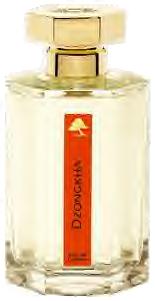
Perfume Review: L'Artisan Dzongkha

Dzongkha, the latest scent by L’Artisan Parfumeur, is a new installment in the travel series that already includes Bois Farine and Timbuktu. Like the latter, Dzongkha was created by Bertrand Duchaufour, author of several other L’Artisan scents, a couple of Comme des Garcons (for example, Sequoia) and Paestum Rose, just to name a few. Dzongkha is said to have been inspired by the temples of Bhutan, called Dzongs.

Dzongkha is a quiet, introspective scent, a study in tasteful understatement. On my skin, it is most and foremost an iris fragrance. From the sweetly piquant beginning ornamented with cardamom, to to the earthier, spicier, almost savory heart of vetiver, incense and a subtle leather note, to the delicate, simultaneously sweet and strangely salty drydown of vetiver, some more cardamom, and a gentle, vaguely fruity accord (perhaps the lychee that was supposed to be in the top notes?), the iris is always present. Warm and spicy, cool and ethereal, earthy, bright and floral, the note here is a chameleon.

This is a soft, soulful blend that must be given time and perhaps a couple of testings before its quite charm will start working on a wearer. At least that is how it was with me. While at first I thought Dzongkha to be rather pale, indistinct and aloof, after a while its various warmer aspects and subtly spicy nuances became apparent and fascinating, and I realized that what I mistook for aloofness was in fact meditative tranquility.

The samples of Dzongkha are now available at First in Fragrance.

Labels: , ,