Luckyscent
Fragrance X
Indiescents
First in Fragrance
99Perfume
ExcelsisUSA
Parfum1
My Photo
Name:
Location: New York, NY
© Copyright 2005-2011 Perfume-Smellin' Things
All rights reserved
Custom Search

Tuesday, August 24, 2010

Retro Green Florals to the Rescue for Summer


By Donna

There always comes that time in the deep trough of summer when the very idea of wearing perfume seems almost ridiculous. It’s fine when I am indoors and the air conditioning is running, but eventually it is necessary to step outside, whether to go home from work - on the bus, no less – or to water the thirsty garden. When the temperature approaches 100 degrees, I not only lose the will to live, but sometimes I even lose interest in wearing fragrance, which for me is even more alarming. Of course, part of it is just trying to avoid creating enemies at the office, but when it’s unbearably hot and sticky I just can’t seem to figure out what I want sometimes. That’s where my summer standby fragrance style comes in; the ethereal green florals. When no other perfume calls my name, I can count on one of these when the heavy hand of seasonal lag lays siege to the city.

Green scents were definitely out of fashion for a long time until niche houses and reissues of classics such as Robert Piguet’s Futur brought them back into focus recently; in fact all of the fragrances I am spotlighting are practically considered “vintage” these days even though they are only about thirty years old. The oldest is Silences by Jacomo from 1978, but I never knew of it back then. It’s the modern answer to the great Vent Vert by Pierre Balmain, opening with a veritable blast of galbanum and citrus leavened with citrus, hyacinth and other florals. Its development is somewhat more unisex and not a delicate as its predecessor’s, seeming to open with a floral burst and then become greener as it progresses instead of the other way around, but it is soothing and cool and just perfect for sinking into during a relentless heat wave. Spraying on Silences is like lying down in a darkened room with an ice pack. I do not know what silences was like when it was first released or how much it has been re-orchestrated, but I do have some vintage Vent Vert and that Queen of Green has definitely been dethroned with its most recent reworking, so in its place, Silences is an excellent choice. Find it at the discounters for less money than you ever thought possible for something this good.

From 1980 comes the elegant Ivoire de Balmain, a perfume I foolishly ignored for years for a very silly reason; it was marketed as having been formulated with blondes in mind, and suited to their skin chemistry, but I am most definitely not blonde. Much later I rediscovered it, and what a lovely thing it is. It is more floral than green, but the back beat of cool grassiness is a constant. The galbanum in the top notes is but a whisper compared to the not-so-silent rush of Silences and its green character comes more from bergamot and other less ostentatious green elements. A rather unusual blend of notes such as jasmine, raspberry, carnation, nutmeg and pepper makes for a fascinating trip through the heart notes and a woody base with good quality oakmoss, sandalwood and labdanum gives it a lasting finish. I recently acquired minis of the vintage EDT and Parfum, and now I know what I have been missing all this time. Regrettably, Ivoire has been reformulated like all the Balmains, but it has suffered less than Vent Vert in this regard and it is still very lovely. It is still available at stores that carry the Balmain line as well as online.

Another favorite green floral of this era is 1979’s Molinard de Molinard. Most people probably only know this house through Habanita these days, since all their classics of the past save that one have either been changed radically or are gone forever, replaced by a line of mostly nice but unremarkable soliflores, and its fragrances are usually very hard to find in the U.S. now except at the online discounters. A notable exception was this entry into the mainstream that saw considerable success for quite a while. It has some of the same character as Lauder’s 1972 iconic green chypre scent Aliage, as it is not very sweet despite rose and jasmine in the listed notes; it has blackcurrant bud, lily-of-the-valley, and a generous does of narcissus, heady and narcotic and refreshing all at the same time yet curiously not very “floral” in the sense that might expect. It’s hard to describe and I wish I had the right words for this aroma, the way the Japanese word “umami” has been appropriated to describe the savory quality of such flavors as meat and mushroom that is separate from salty, sweet, sour or bitter, the only terms normally used to describe how we experience the foods we eat. I always knew that not all taste sensations fell into those strict categories, and now there is finally a word for it; if only I knew how to do the same with fragrance. Anyway, this perfume has an exhilarating freshness to it that lifts my mood when I wear it and calms me at the same time, like a much-needed breeze on a warm, still summer night. I like to apply the perfumed body milk before bed when I need a little help drifting off to sleep after a hot and humid day, and it works like a charm. I think the current version is a bit woodier than the original, which had a certain damp grassiness to it, and it has always had a rather soapy aspect, but it’s not the “fresh” kind of detergent accord that is so unfortunately popular today, rather it arises from the floral and green accords. Look for Molinard de Molinard at mid-range department stores, perfume superstores such as Perfumania and online. You might also get lucky with an online auction site and score an older bottle, which is definitely worth a try. If not, you can get the newer juice for about $30 to $40 for a nice big bottle, so it’s one of the great bargains in perfumery.

There are other green florals from this era that are great for summer wear, but some, such as the best green floral of all time, Jean Patou’s Vacances and the wonderful Yendi by Capucci from 1974 are long gone, and the 1997 latecomer Gucci Envy, which I also love, is perhaps a little too loud and bright for use in very close quarters such as an office. I have been wondering why there were so many perfumes of this style in the late Seventies to early Eighties, and of course part of it was perfume houses trying to duplicate the astonishing success of Cacharel’s Anaïs Anaïs , but others were contemporaries of that milestone scent or even preceded it, so I guess it was just a cyclical trend. I hope it comes back in a big way so I can stock up on them. Had I known back then that this family of perfumes would go out of style for this long I would have bought them by the case. Do you have any favorite green floral perfumes that are currently available? I would love to hear about them! “Greens” seem to be either love or hate for many people, and for me it’s love all the way.

Image credit: Abba-inspired and very “retro” jumpsuit from online costume store PartyPants.co.uk

Labels: ,

Friday, May 28, 2010

Maison Martin Margiela (Untitled) Perfume Review

By Marina

The "green movement" in fragrance continues, much to my delight. Maison Martin Margiela's offering to the genre boldly puts the meaty, earthy, vegetal green of galbanum in the forefront and the centre of its first perfume, named (Untitled) as an obvious nod to the brand's no-label policy. The copy and the video about the creation of the scent (see below), go somewhat overboard, labeling... pun intended...the scent as "radical" and even "iconoclastic", and I suppose that, in a way, in the world of cheerful-sexy fruity florals, a scent this green and reserved, is nothing short of avant-garde.

I imagine, however, that to those who rarely partake of the ...I will use a loose term "mass market" oevre, and lean towards the classics and the "niche", (Untitled) might actually smell traditional/vintage, like something that would be found in the H&R Guide next to Private Collection and Murasaki...with a twist of edgy. In the composition of (Untitled), galbanum, aided by lentisque, and, later in the development, a touch of jasmine, stand for the Classic. Incense, which appears towards the base, is there to make the fragrance contemporary and quirky and "non-stereotypical". (Note how evident this principle of classic-hip is in the packaging: traditonal for a bottle of perfume shape and no-label label.)

I find the combination of the sharp yet fleshy green of galbanum and the sweetly-tarry, almost leathery incense very appealing. The fusion lends (Untitled) a feeling of being both sparse and satisfyingly robust. I haven't been able to find out if and where the Margiela fragrance is sold in the States, it doesn't appear to be so. It is avialable at Colette, EUR80. I have one sample to share, let me know in your comment if you would like to be in the draw. The draw is closed.

Labels: ,

Friday, December 04, 2009

The Futur is Green. Robert Piguet Futur

Knock on wood, there seems to be a new wave of green fragrances upon us. Parfums de Nicolaï Le Temps D'Une Fete, Estee Lauder Jasmine White Moss, Issey Miyake A Scent, re-released Givenchy III (such as it is) and now Piguet's newly re-issued Futur (and am I forgetting something?) are making me hopeful and longing for more. Green is the perfume category I adore, from A (as in Aliage) to Y (as in by YSL). Green scents smell classic slash edgy, and as such- forever modern. That classic-edgy duality makes them ladylike in one context and bold and outre in another. It all depends on the angle at which they turn to you, and they are full of angles.

Futur is a perfect example of the angular, jolie laide beauty of the green genre. And by the way, kudos to the brand for not only avoiding the usual "toning down" that is the curse of most re-issues but actually making the new version seemingly even more forcefully green, dry and sharp than the old (at least judging by a vintage sample). When I say, sharp, in regards to green fragrances, I always mean it is a compliment. That is what I am looking for in green scents: the snappiness, the haughtiness, the attitude, the coldness. Bergamot in the top notes and vetiver with cedar in the base provide plenty of that in Futur. Were it not for ylang-ylang and jasmine in the heart, the scent would have been maximum attitude and zero wearability even for me. As it is, the creamy flowers soften the blow of spiky green accord and lend the composition a hint of classic femininity. "Old money" dressed in kinky leather.

Available at Harrods, £85.00 for 100ml.

Image credit, Mario Sorrenti for Vogue Paris.

Labels: ,

Tuesday, January 27, 2009

Hilde Soliani Stecca: Perfume Review

There is no fragrance more joyous, comforting and poignant than that of tomato vines. No fruit more bright and cheerful visually than tomato. No taste more summery. The whole plant is a delight to the senses.

Hilde Soliani's Stecca is an ode to tomato leaf. It is green, fresh, rooty- as true to the smell of the actual vines and leaves as it gets. As it develops and the earthiness subsides a little, one can sense the aroma of fruits themselves; this slightly sweeter and simultaneously salty, juicy note make Stecca softer and, for the lack of a better word, airier, less earth-bound than CB I Hate Perfume's earthy-green masterpiece Memory of Kindness. There isn't much to describe in terms of development: it is the smell of tomato plant in its entirety, earthier and greener in the beginning, somewhat riper n the middle, fresher in the base. The most pleasurable things in life are simple. Stecca is the smell (not a perfume, as in Proper Perfume, but smell) of uncomplicated, childish happiness.

Among his Elementary Odes, Pablo Neruda has the Ode to Tomato, and I will leave you to savor it:

The street
filled with tomatoes
midday,
summer,
light is
halved
like
a
tomato,
its juice
runs
through the streets.
In December,
unabated,
the tomato
invades
the kitchen,
it enters at lunchtime,
takes
its ease
on countertops,
among glasses,
butter dishes,
blue saltcellars.
It sheds
its own light,
benign majesty.
Unfortunately, we must
murder it:
the knife
sinks
into living flesh,
red
viscera,
a cool
sun,
profound,
inexhaustible,
populates the salads
of Chile,
happily, it is wed
to the clear onion,
and to celebrate the union
we
pour
oil,
essential
child of the olive,
onto its halved hemispheres,
pepper
adds
its fragrance,
salt, its magnetism;
it is the wedding
of the day,
parsley
hoists
its flag,
potatoes
bubble vigorously,
the aroma
of the roast
knocks
at the door,
it's time!
come on!
and, on
the table, at the midpoint
of summer,
the tomato,
star of earth,
recurrent
and fertile
star,
displays
its convolutions,
its canals,
its remarkable amplitude
and abundance,
no pit,
no husk,
no leaves or thorns,
the tomato offers
its gift
of fiery color
and cool completeness.

(translated by Margaret Sayers Peden)

Stecca is available at New London Pharmacy, $175.00 for 100ml.

Other posts dealing with tomato vines and garden theme:

CB I Hate Perfume. Secret History Series

Perfume Review: CB I Hate Perfume Memory of Kindness

The Smell of the Garden

Saint Parfum “Tomato Vine”

Image source, allposters.com

Labels: , , , ,

Monday, January 19, 2009

Mona di Orio Amyitis: Perfume Review

Inspired by the Hanging Gardens of Babylon built by Nebuchadnezzar II for his Queen Amyitis, homesick for the greener and more fruitful Media, Mona di Orio's fifth creation is a spicy, aromatic and earthy take on the green perfume genre.

The pungent, peppery aroma of savory and capsicum and the sweet spiciness of caraway dominate the top notes. The presence of a green accord and, and later on, of moss, make the spices smell earthy, as if ground with black, fertile soil. Iris and violet, the floral notes that have a pronounced rooty aspect, continue the earthy theme in the heart of Amyitis. Woods and amber lend the fragrance rich balsamic darkness, while saffron intensifies the sweetly piquant aspect of the composition. Add to that the powdery, rounded softness of oponax, which smoothes the sharp edges of the spicy, green and resinous ingredients, and you have a complex, long-playing perfume, an exotic and quirky distant relative of the classic green-rooty beauty, Chanel No 19.

Available at Aedes, $120.00-$200.00.

Our past reviews of Mona di Orio's fragrances: Nuit Noire, Carnation, Lux and Oiro.

Image is by Michael David Adams.

Labels: , , ,

Wednesday, March 26, 2008

Perfume Review: Ormonde Jayne Ormonde Woman

If perfumes were being categorized in some sort of Synesthesiac's Guide to Fragrances, Ormonde Woman would represent color Dark-Green. Black-Green even. It is the deepest green imaginable, the color of ancient trees in a witchy forest, on the darkest night of the year. It is not a feminine perfume, at least not feminine in a sweet and dainty or come-hither and vixenish, obvious, way. I imagine Lilith, "the witch Adam loved before the gift of Eve", smelling like this, dangerous and disturbing and strangely, insinuatingly sensual.

Famously featuring a black hemlock note, Ormonde Woman has the kind of meaty green earthiness that I usually associate with immortelle. The oily powderiness -yes, I know, sounds bizarre, but this is a bizarre scent- of violet in the heart contributes to that fleshy, robust feel. Compared to an immortelle-heavy scent like Dior' s Eau Noire, however, Ormonde Woman is spicier, sharper, with cardamom and especially coriander being very prominent. In fact, it, to me, smells more masculine than the very unisex Eau Noire and certainly more masculine than the sweet Ormonde Man. Having said that, I feel uncomfortable using words like "masculine" or "feminine" when describing this perfume. It is beyond definitions like that. Like Lilith, this perfume is not human and requires a whole other vocabulary. My synesthesia is not enough to write a better review of Ormonde Woman. I need the gift of xenolalia.

Ormonde Woman is available at Ormonde Jayne online boutique, £58.00-£112.00.

Labels: ,

Friday, October 28, 2005

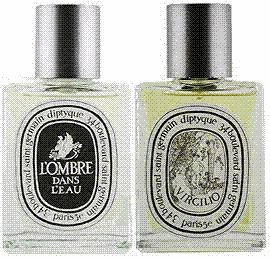
Perfume Review: Diptyque L’Ombre dans L’Eau and Virgilio


Dacha (Russian: дача) is a name for summer home or vacation house in Russia and CIS countries where people spend their summer holidays and grow fruits and vegetables for their own use. Dachas began to appear after WWII owing to the desire of city people, all living in blocks of flats, to spend some time close to nature, and to grow their own produce. Dachas are usually situated on the city outskirts, or near villages located close to a city. The common term for a dacha owner is 'dachnik' (Russian: дачник).
From Wikipedia and my own memories.


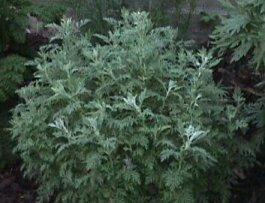
Continuing with the scents that remind me of my childhood, L’Ombre dans L’Eau and Virgilio bring back the memories of my great grandparents and their dacha. Diptyque’s Virgilio, with notes of cedar, basil, thyme, and vetiver, was created by Diptyque to evoke the clear morning of a classical Latin landscape. The landscape it brings to my mind is Russian, not Latin, but it is fresh, green and idyllic nevertheless. Smelling Virgilio is akin to standing in the farthest and the darkest corner of my great-grandparents garden, by the wormwood overgrowth. Virgilio to me is that dark green, earthy and bitter scent of wormwood. This isn’t an easy fragrance for me to wear, as I am not really a fan of herbal and green scents, but I am holding on to my bottle if only for the incredible, heartbreaking evocativeness of this scent.

Another “scent of Dacha” is L’Ombre dans L’Eau, described by Diptyque as the scent of a green riverside garden. L’Ombre dans L’Eau (definitely one of the most beautiful perfume names out there) starts as an amazingly real scent of blackcurrant leaves, slowly a rose note develops, and it is a “young” rose, practically a bud, it smells almost “green” to my nose. Both notes are incredibly true to life, smelling just like the real berries, leaves and buds warmed by the sun. L’Ombre dans L’Eau brings back the memories of hot summers, of picking blackcurrants from the bush, of dear people long gone, of the place that doesn't exist anymore, and of absolute happiness.

I will leave you with the wonderful poem by my beloved Pablo Neruda, called Lost in the Forest.


Lost in the forest, I broke off a dark twig
and lifted its whisper to my thirsty lips:
maybe it was the voice of the rain crying,
a cracked bell, or a torn heart.

Something from far off it seemed
deep and secret to me, hidden by the earth,
a shout muffled by huge autumns,
by the moist half-open darkness of the leaves.

Wakening from the dreaming forest there, the hazel-sprig
sang under my tongue, its drifting fragrance
climbed up through my conscious mind

as if suddenly the roots I had left behind
cried out to me, the land I had lost with my childhood---
and I stopped, wounded by the wandering scent.
Pablo Neruda


*The picture of blackcurrants is from the wonderful site http://www.dnagardens.com/ , the picture of wormwood is from http://bob.bob.bofh.org/ .

Labels: , , ,