Luckyscent
Fragrance X
Indiescents
First in Fragrance
99Perfume
ExcelsisUSA
Parfum1
My Photo
Name:
Location: New York, NY
© Copyright 2005-2011 Perfume-Smellin' Things
All rights reserved
Custom Search

Wednesday, May 04, 2011

A Modern Rite of Spring: DSH Perfumes Vert pour Madame

By Donna

I have extolled the many virtues of Dawn Spencer Hurwitz's fragrant creations in these page before, and now another stunner has come along to entice me. I was especially eager to try this, since I really love both green floral and chypre perfumes, and I am nothing less than enthralled by her newest release, Vert pour Madame, which was inspired by the classic green floral chypres of the past. These are actually anything but “vintage” since they smell so timeless and modern. It takes cues from fragrances like Chanel No. 19, Jil Sander 79 and the long lost beauty Deneuve. Does anyone remember that one? I do, and I still regret not buying a case of the stuff when it was still around, but that was before I knew that the chypre genre was an endangered species. (DSH actually did a re-creation of Deneuve at one time, but alas, some of the materials for it are no longer available.) Who knew that the onslaught of big eighties perfumes (some of which I love) would obliterate or at least overshadow so many great “greens,” send them into retail oblivion and usher in the backlash of “Nineties Non-Scents” where smelling like nothing in particular seemed to be the goal of many mainstream perfume buyers. Fortunately, times have changed again, and talented independent perfumers are bringing us what the mass market cannot deliver. Ms. Hurwitz has taken the best from the greats and added her own stamp with spectacular results.

The moment Vert Pour Madame hit my nose I knew it was destined for a place among the icons from which it gets its distinctive character. Galbanum is very prominent but not in the razor-sharp way it sometimes makes its entrance. I was reminded of Carven's Ma Griffe, but through a soft focus filter, as if it had melded with vintage Madame Rochas or some other floaty aldehydic floral, and indeed this composition has a generous breath of aldehydes that lifts and lightens it even more. As the galbanum's initial effect subsides, the chypre underpinnings, including civet, become apparent, but as a chypre it is more lighthearted than many of this style, a lilting spring melody shimmering with fascination as the notes dance the rites of spring. As lovely as the opening is, it gets even better when everything else chimes in, including white peach, hyacinth, orris, jonquil, muguet, Moroccan rose and jasmine sambac. This stage lasts a long time, and the combination of gorgeous florals and peach could not be more alluring. The old-school chypre base is softened and slightly sweetened with Tonka bean and one of the best musk notes I have ever smelled, and the silken drydown goes on and on, subtle yet insistent. (From the DSH Web site: “Vert pour Madame opens like a wind of Persephone and dries down to the elegance of Demeter.” Well said!)

If I were to smell this blind alongside its various inspirations, I would truly not be able to tell that it's a “modern” formula; it is utterly out of time, and to me it's the kind of perfume that should be immune to trends, so universally appealing is its evanescent grace. I simply can't imagine anyone not liking it. Some perfumes are an acquired taste, or they go through some weird phase before the wearable part finally shows up. This is simply beautiful right from the start and gets even better with time. So if you are longing for the good old days of green florals and chypres, wondering if that Yendi you saw on EBay is still any good, or you don't want to choose between your car payment and a bottle of Deneuve if you can find it, help is finally here, just in time for spring. Vert pour Madame is available on the DSH web site as Parfum extrait and Eau de Parfum, and samples are available. (The available antique presentation bottle with its delicate waist and ornate gold cap is a perfect match for the fragrance.)

Image credit: Artist Nikolai Roerich's initial sketch for the set of the first act of Igor Stravinsky's ballet ‘Le Sacre du Printemps' from mmlc.northwestern.edu

Full disclosure: My sample was given to me for testing by Dawn Spencer Hurwitz.

Labels: ,

Thursday, February 10, 2011

Mushrooms Haute Couture: DSH Cuir et Champignon

By Marina

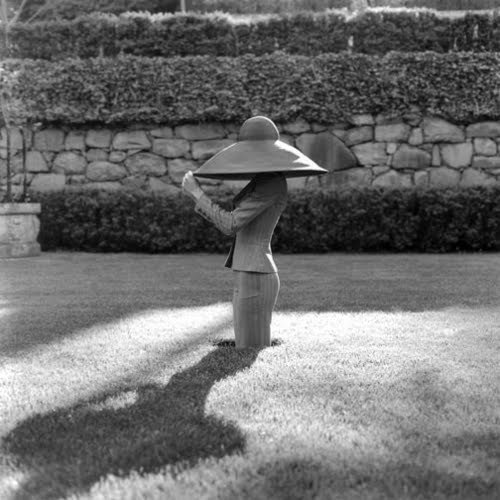
Cuir et Champignon starts wonderfully dirty and ends amazingly elegant. There is an expression in Russian, iz gryazi da v knyazi (из грязи да в князи), from dirt to knezes, from rags to riches. In the case of Cuir et Champignon, it's not so much a tale of Cinderella marrying well. The composition transports the wearer from literal dirt of the forest floor into the most fashionable of homes. How about this...A wood nymph escapes to Paris and becomes a style icon, a muse to a famous couturier...

The graceful subtlety of the blend is rather unexpected in a perfume that is about leather and mushrooms. I imagined a scent very tarry and very dirty and wasn't prepared to meet instead this exquisite creature with cinched waist in a style of 1940s. Having said that, "subtle" in this case is more of a reflection of an elegant structure of the well-balanced composition, not of the intensity of the star notes. Lovers of leather will be satisfied with the accord's unmistakable presence, from start to finish of the development. Fans of earthy scents will be delighted to know that under the exquisite veneer the nymph is as wild as ever. Melusine had a serpent's tail; this one is hiding roots...

Mushroom-seekers like me (there are some out there, aren't there?) should be thrilled to smell quite a lot of cepes absolute alongside the leather. The pairing is genius. Mushrooms lend leather a vegetal instead of animalic undertone (although there is some of that too, with civet in the base), making it dirty in a new and unique way. And the leather turns raw and rustic mushrooms into a Perfume...and Haute Couture.

Available at Dawn Spencer Hurwitz's Parfum des Baux Arts and Indiescents, $22.00-$100.00, depending on the size.

Image source, Rodney Smith
.

Labels: , , ,

Thursday, January 20, 2011

Winter Roses. Fatale West: Xerjoff Damarose, DSH dirty ROSE

By Marina

"O Rose thou art sick.
The invisible worm.
That flies in the night
In the howling storm:
Has found out thy bed
Of crimson joy:
And his dark secret love
Does thy life destroy."
The Sick Rose by William Blake

Sometimes one wants to be comforted, sometimes one wants to feel danger(ous). For such a mood, nothing is more suitable than Dark Roses. Xerjoff's new rose chypre, Damarose, is one of them. The composition lures you in with the playful flirtatiousness of a fruity accord, a tangy, non-sweet blend than made me think of red currants and cranberries...don't let it fool you with its coy smiles though...the innocent flirt of fruits, pink roses and freesia will turn into heavy-lidded seduction, and smiles will become come hither pouts as soon as patchouli enters the scene. Damarose is très recherché and even patchouli, ever the wild child, is elegant here, its earthiness stylized, shown just a little, better to intrigue you...its slight chocolate-like undertone ever so discreet, just noticeable enough to tempt. The ambery, musky base is the texture of silk...dark, dark maroon silk. By the time the drydown comes, you realize that roses, which in the beginning seemed to be pink, fresh, innocent and always in a good mood, are in fact anything but. However, at that point it's too late, you have fallen hard for the fatal charms of this chic creation.

While Damarose is a vamp in a figurative sense, dirty ROSE might possibly be the actual creature of the night. In contrast to the dressed-up, Parisian elegance of Xerjoff's offering, DSH's has something wild about it. Damarose's earthy feel was something of an affectation, here the rose is truly dirty. I'd switch the capitalization, and call it DIRTY rose. "The rose is blasted, withered, blighted, its root has felt a worm..." It won't bother luring you with faux sweetness, it will bite you right away with spices. Geranium and pimento give the blend a wonderfully sharp feel in the top notes; the heart is a sacrilegious mix of sacred and base, incense and patchouli; the drydown is the wicked woods from which you'll never want to find a way back home. Dawn Spencer Hurwitz recommends this rose for men, and I can see how it can easily be worn by them, with rose hiding all the while behind spices, resins, vetiver and tobacco...now you see it and now you don't...a hint of something red, moving behind the trees...Where was I?...Oh, right, it can easily be worn by men. Having said that, like any dry, leathery, "goth" fragrance of this kind, dirty ROSE is obviously unisex and dare I say would smell even deadlier on a woman.

Damarose is available at Xerjoff's e-boutique, € 500.00 for 100ml, and I assume will be sold soon at Luckyscent...dirty ROSE can be found at dshperfumes.com, $40.00-$100.00.

PS. I recently revisited Black Rosette by Strange Invisible Perfumes, in its new Eau de Parfum concentration, and fell hard for it all over again. This is a Dark Rose extraordinaire, the very epitome of Dark Rose-iness. If my memory serves me well, the new blend has less of a "leathery like lapsang-souchoung" and more of an "actually leathery" quality. I don't know if I particularly care for the loss of the tea note. But I am thrilled that I can now finally spray this nocturnal masterpiece. (Available at siperfumes.com and Barneys, $220.00 for 50ml.)

Labels: , , , , ,

Tuesday, November 30, 2010

Adventures with Magic Mushrooms: DSH Perfumes Cuir et Champignon

By Donna

As the regular readers of this blog may remember, I am a big fan of the fragrance creations of Dawn Spencer Hurwitz of DSH Perfumes. Her range is enviably broad, and she has the unique perspective of a talented visual artist, which has resulted in some truly innovative fusions of scent and color concepts. One of her talents is making fully realized perfumes using all-natural ingredients, although you would never miss the synthetics even if you already knew about that.

Now she has released yet another eagerly anticipated perfume that is different from anything I have ever smelled before – Cuir et Champignon, leather and mushroom. That's it – no sweetness at all except for a fleeting breath of forest aroma before it goes on the skin, then it quickly develops into a salty, savory, brothy blend of soft leather and very earthy mushroom. The mushroom note dominates at first, and then gradually the leather joins it as it softens down. In fact it is the saltiest perfume I have ever smelled; it leaves TDC's Sel de Vetiver in the dust in that respect, and Womanity by Thierry Mugler only allows a fleeting glimpse of its much-vaunted caviar note before it's buried in sugary sweetness, which was a disappointment for me. Cuir et Champignon has an almost meaty “taste” to it, which is the flavor called Umami, borrowed from the Japanese language, and it does take some adjustment to think of it as perfume, especially at first before the leather kicks in. I enjoyed wearing it by itself, when it eventually dried down to smooth leather and loamy earth, but the other notes listed never really developed on me – of course it's not all mushroom and leather, it has things like bergamot, clary sage, galbanum, chamomile, clove bud, honey, gardenia, sandalwood, tuberose, castoreum, civet, vetiver, guaic wood, cedar and tobacco. I didn't get these very much, because on my skin it's just mostly mushroom; that cépes absolute is mighty powerful stuff.

So anyway, I decided to try layering it with some other perfumes to see what would happen. I do not normally do much with perfume combining and it's usually an accident when it happens; if I forget that I put on something really persistent in the evening and then apply something else in the morning, I get a surprise. I generally go with the idea that the perfumer knew what they were doing and who am I to mess around with the delicate balance, but in this case I could not resist. Since Cuir et Champignon is salty, savory and earthy, I thought it would be perfect for toning down perfume that's a little (or a lot) too sweet or loud. Whatever I chose would need to have a strong character of its own to stand up to the cépes and have some compatible notes. I hit upon the idea of pairing it with some big-haired Eighties fragrances, and into my hopelessly disorganized jumbled eclectic stash I went to find some candidates.

My first experiment was conducted with the original Salvador Dali woman’s perfume from 1983, the one in the “lips” bottle with a white frosted “nose” cap. It's a floral/woody/ambery Oriental with a pleasing softness to it, but really very sweet, kind of like a slightly less extroverted Bijan for Women. Well, putting these two together was alchemy indeed, because I got something that had the firepower of the old Lanvin My Sin (remember, there is civet in Cuir et Champignon) while toning down the rather syrupy aspect of the Dali. (I found out that Alberto Morillas did that one, not exactly the style he is known for now but it makes me admire him even more.) Okay, I was really on to something here.

Next up, Aubusson's Désirade from 1990 – technically still in the Eighties and certainly in the style of the time, it's an Oriental perfume with pineapple, cassia, tuberose, osmanthus, lots of vanilla, opoponax, musk – you get the idea, big and bright and retro. It's something I love to wear at home or out, but never to the office, it's just too much. I tamed her with the mushrooms and the result actually reminded me of a Guerlain, an echo of Cuir Béluga with its leather note softened by heliotrope and vanilla. Now I don't have to spring for the Guerlain if I get the craving for it, I just need to keep these other two handy.

Then I got another wild idea – if Eighties perfumes can be quieted down this way, why not go even older and try it with an actual Guerlain? So I tried it out with my pre-reformulation Shalimar Parfum de Toilette. Oh yeah, baby! It made the grande dame even smokier and even a bit feral, and I got a little shadow of melancholy L' Heure Bleue action going on. Now I love Shalimar, but sometimes it gets too sweet on me, many things do; if there is any sweetness in a fragrance my skin will amp it up and throw it out there like radio waves. (I usually like it when that happens but sometimes I have to try to be civilized around other people and I can't fly my fragrance freak flag.) After blending Shalimar with the mushroom scent I think I will have to try it with Lonestar Memories or some other smoky, tarry thing with no discernible sugary notes and see what happens.

At this point my mind wandered into truly twisted territory. What if I mixed this earthy, humusy forest floor scent with something else that's also devoid of “feminine” character? What would happen if there was no vanilla or Tonka, no caramel or syrup to subdue? I thought about that for a while, and then it hit me: Miss Balmain, the most misunderstood of all chypre scents, dry and austere, a stiletto-heeled librarian forever in the shadow of her femme fatale sister Jolie Madame. I am happy to report that this was also a success. The truly magical combination coaxed some fragile blossoms out of Miss Balmain's steely heart and softened her up without adding anything remotely girly to her demeanor, while adding a green depth that seemed like it was meant to be, perhaps restoring what was lost in translation when Balmain started reformulating its fragrance line. (My bottle is pre-IFRA nonsense but not the original formula.) I felt like a genius after that experiment.

Finally, I came full circle and pondered if anything else in the DSH line would be a good foil for Cuir et Champignon. With such a wide range from which to choose, surely something would be suitable. I chose her very popular Cimabue, which is an intensely spicy and saffron-rich concoction that I did not quite get along with in the alcohol-based version but which I swooned over in the oil concentration, which is what I used for the layering. Well, it actually worked pretty well, adding an unexpected fresh note to the spices and taking the sweetness down several notches, which in turn shone a spotlight on the saffron and cistus at the expense of the sweeter ingredients. Cimabue is already a favorite with men, and I can imagine that they might be interested in an alternate way to wear it.

My conclusion was that this is really two perfumes in one. For those who want to wear it by itself, it becomes an earthy skin scent with little to no sweetness and decent longevity. It also shines as a way to tame the high notes of fragrances that could use a bit of smoothing out to make them more wearable while not obscuring their better qualities. It is a limited edition fragrance sold only at the DSH Perfumes Web site. One ounce of Eau de Parfum, which is what my sample is, is $100, and a one dram roller ball vial of the oil is $55; I can't even imagine how intense that must be! (Smaller sizes and a $4.00 sample vial are also available.) My small sample vial was sent to me by DSH for review purposes.

Image credit: Ceramic “Magic Mushrooms” from love♥janine's Flickr photostream via Creative Commons license, some rights reserved.By Donna

Labels: , ,

Tuesday, July 06, 2010

Pyramid Schemes: The Egyptian Perfumes of Dawn Spencer Hurwitz

By Donna

As some fragrance fans may know, Colorado artisan perfumer Dawn Spencer Hurwitz (the DSH in DSH Perfumes) has been involved in a very special project for the Denver Art Museum for its new King Tut exhibit. Her mission: to re-create perfume oils from ancient Egyptian formulas, hewing as close to the original materials as possible from old texts handed down through the ages. Dawn's advantage was that she is already a master of natural perfumery, so she was a perfect fit to lend her talents to the project. (After all, she already has an outstanding group of historical perfumes under her belt for the DAM, the Perfumed Court series of scents based on the original formulas of court perfumers at the palace of Versailles during the time of Marie Antoinette, Madame du Barry and of course the Sun King, Louis XIV.) To go with the Egyptian perfumes, she designed these to-die-for bottles, and I mean that in the literal sense, since they were made to look like the elaborate bejeweled vessels that were entombed with Egypt's elite rulers. They even come with a “mummy” wrapping!

I have been an admirer of DSH ever since I was privileged to test and review a broad range of her perfumes a couple of years ago, so I was excited to learn that she was participating in another special artistic project, such as the one that resulted in the masterful Memory & Desire No.1. How exciting for any perfumer, to have a chance to delve into history and come up with elixirs with which the Pharaohs of Egypt might have anointed themselves! I feel very fortunate to have received preview samples of these rare perfumes.

The perfumes themselves are of varied styles, though all share a common thread of having resinous materials in their composition after the fashion of the times. I have to state outright that I have no idea of the ingredient list for these perfumes, so I can only give my impressions and maybe a few educated guesses. This is definitely unexplored olfactory territory for me. I will start with Megaleion, a musky scent with a nut-like warmth and a distinctly pungent green aspect. Had I been told that this was a long-lost vintage Chypre scent from the Thirties I would have had no reason to disbelieve it. It has no discernible sweetness and skews a bit toward the masculine side in modern terms, but of course that definition would have been meaningless all those centuries ago. It has a smooth undercurrent of what seems to be a very good quality botanical musk accord.

Antiu (a.k.a. Metopion) is a fascinating study in contrasts, opening with potent, penetrating bitter almond combined with the juicy snap of fresh galbanum – no guessing needed here! I am pretty sure I have never smelled these two things together before, but now that I have, I want more. It's a marriage made in heaven, or should I say the verdant realm of Osiris? Once the almond retreats it becomes a harmonious blend of green herbal aromas with a slightly sweet resinous base. I just want to keep re-applying to get the initial sensation over and over again. These are about the last notes I would ever have thought of pairing up in a fragrance, but that's why DSH is so respected for her artistic approach to perfumery. My only complaint about Antiu is that the bitter almond does not persist long enough into the drydown for me, but that is to be expected of many naturally sourced fragrances.

I don't really have the right words to describe Keni (a.k.a. The Medesian) since it does not smell like anything in the lexicon of modern perfumes. I guess I would say it's perhaps the most rustic in style of this group, in a good way. I’ m pretty sure there is labdanum in this, or a closely related plant resin derivative. It begins with slightly medicinal character, but in a pleasant, aroma-therapeutic kind of way. It has green notes as well, but more subdued, not the splashy overdose that's in Antiu, and maybe some hibiscus too. It is a little strange, but the more it's on my skin the better I like it; it has an odd quality of seeming to cool down and acquire a mineral/leather tone once it has interacted with the skin’s surface, somewhat in the manner of DSH’s Arome d’ Egypt, a perfume I love that’s already in the line. It has a little of the what-the-heck-is-that-anyway mystery that so intrigued me about Memory & Desire No.1. I enjoy giving my nose the occasional puzzle piece to sort out; and I will keep coming back to Keni.

I have saved the best for last, and I am unable to give an unbiased opinion about my favorite of the four, 1,000 Lilies (a.k.a. Susinon). I fell head over heels in love with this fragrance as soon as I opened the vial, and the affair has only escalated as I have been testing it on my skin. It is simply beautiful, and of all of these it's the one I really, really hope that DSH will decide to make for her regular perfume line; I rather like its Egyptian name of Susinon if it does go into production. It's an ethereal green floral that has echoes of existing perfumes in the DSH repertoire that I admire, the lovely Padme Lotus and Madonna Lily, but it's lusher, brighter, greener and more long lasting than either of those. (I wore it to bed one evening, and in the morning the cat that often shares my pillow smelled of it all the next day.) It also reminds me of a long-gone perfume that was a favorite of many; Alpine Lily by Crown Perfumery. (You may recall that this was the house that Clive Christian decided to purchase in 1999 in order to produce perfumes under his own name, and sadly all the wonderful Crown scents were discontinued a few years later.) Alpine Lily was one of my favorites in that line, and when I smelled 1,000 Lilies I was struck not only by its beauty but also its affinity with Alpine Lily. It is certainly not a replica by any means, but it shares the same soft, heartbreaking shimmer of tender lily essence that I so loved in the Crown scent. If you have ever tried Serge Lutens Un Lys and thought it was too chilly or too overwhelming, but you really like the aroma of lilies, this would really hit the spot. I can close my eyes and visualize wearing this while floating up the Nile on a luxurious royal barge, trailing my hand in the water on a luminous Egyptian night under the full moon. If this kind of perfume is what the Pharaohs got to take with them into the afterlife, I am going to start worshiping false idols immediately.

Image: The Great Pyramids of Egypt from Bruno Girin’s Flickr photostream per Creative Commons Share-Alike license, some rights reserved.

Disclaimer: The samples for this review were provided to me by Dawn Spencer Hurwitz for testing.

Labels: ,

Thursday, October 01, 2009

DSH Perfumes: New Scents For 2009 and a Sneak Preview

By Donna

A few months ago I did a five-part series about this line, and a number of them have really lingered in my mind as being bottle-worthy, so I was eager to try some more. It is my pleasure to bring you a few additional impressions of DSH Perfumes, this time focusing on some new 2009 releases and a preview for 2010.

It’s hard to keep up with the amazing variety that Dawn Spencer Hurwitz creates in her perfumes; it seems that she is always coming up with something original. One of her series, Chroma, is based on translating the idea, the feeling even, of a specific color into a fragrance. The latest one is the lovely Cyan which made its debut at the Spring 2009 Sniffapalooza event, named for a pale blue/green tint you might think of as a color that is restful and light-filled, though the light is filtered through a prism of water in the luminous aquamarine way of the shallows around a tropical island. An eau fraiche that’s perfect for summer, it joins the weirdly wonderful Quinacridone Violet and ferociously green Viridian in the Chroma 2 lineup dedicated to the abstraction of colors in the artist’s palette. Cyan is a tender, wispy thing, cooled with bergamot, linden blossom, cucumber, jonquil, wood violet and seaweed, of all things, though it is not an oceanic/ozonic fragrance by any means, it brings to mind cooling streams and sun-dappled pools filled with polished stones. The ethereal linden dominates at first, and when the gentle violet drydown commences it is really beautiful. It is fairly fleeting on the skin, but it’s meant to be splashed with abandon, I think. That’s what I would do with it.

Also perfect for cooling down is the exuberant Yuzu, which shares its dazzling life-like juiciness with DSH’s Pamplemousse, but is a bit sweeter, with interesting base notes of cedar and sandalwood playing off the fruit. This is one of the 100% natural fragrances in the line, and the regular spray is water-based and short on longevity, but I really like it. For a stronger concentration, get the roll-on oil formula instead of the spray. It probably won’t turn sour on you like so many citrus blends, unless your skin clashes with anything that has a peel. It contains no less than nine different elements of citrus in it, pretty much everything in the perfumer’s arsenal: blood orange, lemon, white grapefruit, yuzu (in both top and heart notes), green mandarin, lime peel, pink grapefruit, petitgrain and neroli. This was also new for summer 2009 and there is still time to put it to good use. It’s in the new Garden Bathe Aromatherapy collection. When I put this on, my nose was glued to my arm all day long.

Another new scent in the Garden Bathe group for summer is Sud de France, which unfortunately did not agree with my skin chemistry. Opening with bergamot, lemon and other citrus notes, it never got beyond a rather harsh and bitter quality. I was waiting for the linden rose, hay and other softer elements to kick in to make the promised feeling of summer life in the South of France to come to life. It puzzled me, because citrus almost always agrees with me, even grapefruit, so I don’t know what happened with this one. The cedarwood in the base kept popping up all day, adding to the astringent quality. The idea is lovely but it’s sadly not for me. I put it away in the hope that it will be different later on.

The delightful Bermuda Lyme from the Essense Oils Studio collection is sunny and cheerful and unlike so many lime-based scents it’s wearable for the ladies as well, since it is absent the usual overpowering, camphorous woods and other clichéd “masculine” accords that so often accompany this note. This one is available in the full range of regular Eau de Parfum spray, water-based body spray, roll-on oil and the bath and body range of body wash, shower cream, etc. I could just live in it - it’s got plenty of lime character from both lime peel and Khaffir lime leaves, but it’s also infused with coriander seed, geranium, juniper berries, rosewood, rum and tobacco. Yes, those do sound manly don’t they, but it somehow works great as a unisex scent, and it’s very well balanced. My sample is the water-based spray, and as I write this it’s heading toward ninety degrees outside; I could use a liter or two right now, or just fill a kiddie pool with the stuff and I’ll be happy.

Moving on to the fall season, the ultra-comforting Epices d’ Hiver, new for fall 2009, is just delightfully spicy without being gourmand. A unisex scent imbued with nutmeg, sweet orange and other warming notes, it has a slightly smoky background like a burning candle that I found very pleasing. Ms. Hurwitz has a real flair for this style of scent, and this one just got better on me with time, never getting overly sweet. It is the aromatic equivalent of being in a room with a fireplace as the festive elements of the winter season waft through the house. It’s one of those fragrances that would work equally well as an ambient scent, but although it does not feel as though it was conceived that way, it would make an awesome candle or potpourri. It is far more subtle and refined than the typical fragrances used in this way, so don’t let that put you off trying it.

With the 2010 preview Bancha, the perfumer has once again ventured into new territory, adding a different facet to a common perfume ingredient, yet it’s very familiar to me. You see, I have drunk a lot of bancha tea in my life; back in my misguided youth I was really into macrobiotics, and this was one of the allowed beverages, a very coarse type of Japanese green tea with a straw-like character. Bancha the fragrance is an excellent take on this and it really brings back the memories. Much in the way of the masterful Memory and Desire No. 1, this 100% botanical fragrance is compelling and different and nearly devoid of sweetness. It’s earthier than any other tea fragrance I have ever smelled, with an authentic roasted touch to add even more depth, and I like that very much; it will make a really great masculine scent. A distinct green character lifts it up and keeps it from being too “twiggy” – a quality I know only too well from having drunk so much bancha – in macrobiotics you don’t put sugar in your tea, ever, and bancha is pretty chunky stuff. I place this one emphatically in the “win” column.

I have one fragrance from my earlier series to revisit – Cimabue, one of the most popular scents in the DSH lineup. For some reason it did not click with me the first time around, even though a reading of the notes would make it seem ideally suited. Along with my new samples I received some Cimabue in the oil formula instead of the EDP. Oh boy, does it ever make a difference, now I am totally in love with it! The concentrated fragrance oil brings out all the hidden depths and it just comes to life. This really highlights the importance of trying different strengths and formulations of a perfume to see which one you like best. For my part I will put this complex saffron-infused Oriental style perfume oil to good use when the cold weather arrives.

Image credit: Mt. Fuji overlooking tea fields in Shizuoka, Japan, via allposters.com

Labels: ,

Tuesday, March 03, 2009

DSH Perfumes Part Five: Palace of The Sun King (And a Prize Draw)

By Donna

In this the final installment of my series on the perfumes of Dawn Spencer Hurwitz, I have saved a special group of fragrances for last. Even among the offerings of a niche perfumer, these are unusual both in concept and execution. They are the scents of The Perfumed Court series and there is a dual theme – they are both inspired by the royal personalities at the court of Versailles in its glory days and made as closely as possible by natural methods, using materials in existence at the time. DSH created these entirely of natural botanicals except for the animalic notes that are unavailable today, so a few synthetics are used for those. However, the way these smell, you would never know they were anything but all natural. I tried one of them when the samples first arrived, and I knew immediately that they were in a category apart from the others. I waited until I had finished testing the rest of the scents before coming back to these. In fact, except for the first one I tried, I did not look at the notes before trying them; I anted to be challenged and surprised.

One of the simplest in composition is Eau de Fleurs d’Oranger du Roi (Orange Blossom Water of the King), inspired by a favorite “signature” scent of Louis XV, made entirely of citrus and a tiny touch of Ambergris – in fact it is 99.99% natural with the exception of the synthetic Ambergris. I really liked this a lot – unlike the Fleurs d’Oranger from the Les Rouges series, it is not warm and honeyed but fresh and soapy, the character of the living flowers bursting forth. The soapy quality is not a favorite for everyone, but I love it, and this would be ideal for summer, as it holds to that clean aroma all day long. It does get a bit sweeter as time passes but the freshness never goes away. Notes are Bitter Orange, Lemon, Italian Neroli, Orange Flower Absolute (France), Orange Flower Water, Ambergris, and Petitgrain. Short, sweet and to the point, it has a charm all its own.

Even more transparent is the herb-infused Eau de Cologne/Aqua Admirabilis. This 100% botanically sourced scent is a blend of citrus ingredients such as Lemon, Neroli and Petitgrain with the addition of Lavender and Rosemary. The herbal character is evident but never attains dominance over the citrus, even though both of them are certainly powerful enough to do it. The main impression is of delightful lemon and orange notes made even zestier by being perfectly counterbalanced by the herbs. This one is not sweet at all and is very much in the tradition of classic Eaux de Cologne such as 4711 and Guerlain’s Eau de Cologne Imperiale. (I generally shy away from too much Rosemary in fragrances, since it always makes me think of “non-perfumey” foods such as roasted chicken, but I quite liked it, the herbal dosing is just right and nary an oven-browned fowl is in evidence.) This is one to reach for on those unbearably hot and humid summer days when you can’t stand the idea of anything sweet on your skin.

The famous Madame du Barry, the last official mistress of Louis XV, inspired Eau de Coquette. When I first put it on it seemed to be a simple bouquet with a sweetly aromatic hay-like herbal quality to it. However, that was deceptive; as time passed, the hay character subsided and was replaced by the spicy warmth of Nutmeg, Centifolia Rose, Orange Flower and a rich, sweet Jasmine. The herbal opening was Angelica, and it was like a little Trojan horse –while I was smelling it and trying to figure out what it was doing, all these lovely floral notes sneaked in. I know some people do not care for Angelica, but in this perfume it does not dominate or give off that odd wetness it can sometimes have. It is beautifully balanced with the florals, and matches especially well with the Orris that chimes in a little later. The overall effect of the florals and the spice was like a subtly sweet carnation to me, the kind of Garden Pink that smells so delicious on a sunny day. An Ambergris base gives it excellent longevity. Eau de Coquette was made using the actual notes of an 18th century perfumer who made a perfume very like this one for Madame du Barry, and my hat is off to Monsieur Jean-Louis Fargeon – he really knew how to make a good perfume. I am delighted that an old formula like this can be brought to life again; if this is any indication of the fragrances common to the 18th century, I say let’s resurrect more of them.

As Eau de Coquette is intended for evening seduction, so is the other Madame du Barry inspired scent meant for day wear. It is called Eau de la Favourite and it is definitely of a different style, although it is also based on a formula by the same perfumer as its sister scent. It begins with a delicious burst of orange and lemon flowers, and then quickly becomes a lightly sweet Iris scent with an unusual “carroty” quality, which turned out to be Daucus accord– also known as “Queen Anne’s Lace” or wild carrot. Some synthetics were used to recreate this unusual note; otherwise this is 96.5% natural botanicals. Orris root imparts a velvety smooth Violet note to the composition. My only quibble with Eau de la Favourite was that opening did not last long enough for me – the fresh orange is truly mouth-watering for about five minutes, then fades as the heart notes start to take over. The complete list of ingredients: Top notes of Esprit de Fleurs de l’Orange, Lemon. Heart notes: Orange Flower Absolute, Orris Concrete, and Orris Root. Base notes: Daucus accord, Eau de vie de Cognac, Mace. The cognac and spice notes are very subtle but they provide an intriguing backdrop to the rest. At first I thought it was not going to last very long, but once the opening florals subsided it became a lovely soft skin scent that really grew on me. I would recommend it for warm weather– it’s a pretty, happy fragrance that feels like a carefree summer day.

I had no idea what to expect from Cyprian, which is 100% natural and derived from a recipe for a popular wig powder and hair pomade of the era. Come to think of it. I never thought much about what a powdered wig might smell like! If this fragrance is any indication, then the royal Court must have been a pleasantly aromatic place, for this is a truly lovely perfume. It opens with intensely green Bergamot and herbal notes, and soon turns to the softest, most gentle Violet/Iris fragrance I have ever experienced. As subdued as it becomes, it lasts a long time, and it’s a poster child for the term “skin scent.” I am sometimes disappointed with overly powdery Iris perfumes, but this is not really powdery at all, despite its derivation from a hair grooming preparation. It dries down to deep mossiness that I found irresistible. It is definitely a unisex fragrance and seasonless as well, and I would gladly wear it anytime; I have never been quite so charmed by an Iris perfume as I was by this simple little gem. Notes are listed as Bergamot, Clary Sage, Orris Concrete, Orris Root, Violet Leaf Absolute, French Oakmoss and Rosewood (Bois de Rose.)

Eau de Trianon is, of course, a tribute to Marie Antoinette and her country retreat and is based on detailed notes from a perfume created for her by the talented Jean-Louis Fargeon. The Queen commissioned him to create a perfume that would remind her of her beloved gardens. It started out as a soft pastoral floral on me and then took a strange turn into sugared celery territory. The celery aroma, which naturally turned out to be Galbanum, soon subsided into a gently green herbal quality, and the sugar turned into Orange Blossom and Lemon, leaving what I would describe as a misty fragrance with a touch of melancholy, like an early morning walk before the dew evaporates. It contains Rose and Jasmine, but these are not much in evidence to my nose, as they are subordinate to the cooler notes of Jonquil, Orris and Violet Leaf as the scent’s heart notes are revealed. It is a very pretty scent but not as substantial as one would think, considering the base notes of Ambergris, Atlas Cedarwood, Benzoin and Vanilla Absolute. The benzoin I do get, but the wood and vanilla are very faint. I think this one is probably much more true to itself in Parfum strength. The citrus notes were surprisingly persistent to the end.

In contrast to the wistful Eau de Trianon, Mille-Fleurs Bouquet goes on rich and heady. Opening with Cassie, Lavender and citrus notes, it bursts with Rose Geranium and profoundly scented Gallica Rose Otto, as well as Jasmine, Orange Flower and Violet. Ambrette Seed, Brazilian Vetiver and Vanilla Absolute make for a lovely drydown and excellent longevity. The rather frilly name notwithstanding, this would be suitable for men and women alike. There is quite a lot of Lavender in this but I did not find it to be at all medicinal or overpowering. It seems to be much more about the flowers than the leaves and thus is not as intrusive or dominant as it can be in some perfumes. Mille-Fleurs Bouquet was another “sneaker” for me – it seemed conventional enough at first but as it developed I kept finding new and different things to love about it. Despite the high floral count it has a fresh and vivid air, and the generous dose of vetiver ensures that it never gets sweet. It reminds me of the tumbling exuberance of a cottage garden where the herbs and blossoms intertwine and mingle their essences together to create an oasis of olfactory pleasure.

One of the “curses” of having a very sensitive nose is dealing with smells that are not good. I cannot stand the smell of cilantro, also known as coriander. The fresh leaves of this love-it-or-hate-it plant are barely tolerable to me when mixed in with other ingredients and unbearable alone. The origin of this aversion is a bad garden experience I had many years ago - I decided to grow some cilantro in my garden. (At that time, I did not dislike it.) The mistake I made was in smelling the fresh green seeds – far more concentrated in their odor than the leaves, they were so repulsive that they put me off the fresh stuff altogether. But something magical happens when coriander seed is allowed to ripen and then dry completely; they develop a warm and savory taste and aroma that I love. So I was pleasantly surprised to find Coriander seed present in abundance in Pot-Pourri de Pompadour, a re-creation of a traditional wet potpourri recipe. It is just delectable, a zingy herbal blend that perked up my senses the moment I put it on. It may have been made from a formula for a room fragrance, but my skin loved it. I can’t imagine a better way to wake up on a summer morning than to splash this stuff on. The complete list of notes: Coriander Seed, Crushed Mint, Lavender Flower, Rosemary, Allspice, Egyptian Rose Geranium, Lemon Balm, Marjoram, Palma Rosa, Centifolia Rose Absolute, Jonquil, Orris Root. If only all homes smelled this good.

The perfume I tried first from this group, and then put away until I could focus on them completely, was the gorgeous Reinette. Similar in its headiness to Mille-Fleurs Bouquet, it has the added dimension of Hyacinth in its composition, along with Carnation and Tuberose. It is flagrantly romantic yet fresh and lifelike, and again is not overly sweet despite the abundance of florals. (In fact, none of these scents are, which leads me to believe that today’s overly sugared perfumes must have a lot of synthetics in them to create that impression, along with too much cheap vanilla and other things that mask overall poor quality.) It is a tribute to Jeanne Poisson, the Marquise de Pompadour, the most influential mistress of Louis XV and the person most responsible for introducing the art of bathing to the Court, for which we all must be very grateful indeed. Hyacinth was said to be her favorite flower, which seems perfect for a woman who loved cleanliness. Cassie and Rose soften its airy sharpness, but the centerpiece of this “little Queen” of a perfume is the delicious Hyacinth, also a favorite of mine, and wearing it made me feel like a Queen of luxury. Try this one if you want to be noticed.

Le Roi Soleil is of course, named for Louis XIV The Sun King himself, and it’s worth of bearing the name. It is meant to be a masculine scent, and it succeeds admirably in that regard, but I enjoyed wearing it very much and I think anyone else would too. It is the most complex of The Perfumed Court series, as befits a monarch. Opening with the high notes of Bergamot and Lime Peel, it becomes warm and spicy as it develops. Carnation and Clove are much in evidence as well as a very high quality Orange Blossom and the pleasing warmth of Oregano. It is the most sophisticated in composition of this group, with base notes that include two kinds of Oakmoss, Frankincense and Leather. It is possible to glimpse the origin of today’s perfume blends with this kind of scent. Smooth and elegant, it could be presented as a modern introduction by a major house and no one would be the wiser. While it is technically modern, of course, it is made of natural materials with only a trace of animalic synthetics, being 98.9 % naturally sourced. I found the leather and oakmoss drydown to be exceedingly pleasing, and the intertwining of the incense and ambrette seed with these elements made it downright addictive. Its construction is traditional but it has enough of a twist to it to make it very interesting. I would stack Le Roi Soleil up against any prestige men’s fragrance available today. Full list of notes: Bergamot, Lemon, Lime Peel, Rosemary, Rosewood Sweet Orange, Carnation Absolute, Clove Bud, Esprit de Fleurs d’Oranger, Esprit de Lavande, Grandiflorum Jasmine, Origanum, Ambergris, Ambrette Seed, Brown Oakmoss, Castoreum, Frankincense, Green Oakmoss, Infusion of Leather, Sweet Birch. (Did I mention I am a birch lover? And that it pairs superbly with incense?)

* * * ** * * ** * * ** * * ** * * *
This concludes the DSH Perfumes series. It is by no means a complete list of all of the DSH offerings, for there are many more to explore. It is more of an overview of the impressive variety to be found within the line. (I am already starting to miss having a new one to try almost every day.) Please bear in mind that I only sampled the Parfums des Beaux Arts and none of the Essense series of Aromatherapy oils. That is a whole different world, which I hope to explore someday soon. I must say that now that I know how high the quality of the offerings I would not hesitate to order either the oils or perfumes, even untested. Of all the ones I tried only a few did not suit me but their quality was not the issue, rather my own chemistry and/or preferences.

One thing that really emerged as I tested each perfume was how they presented themselves right at the beginning – since they are mostly natural, there is no opening blast of aldehydes or other materials that distract from the perfume’s true character, and they are not overloaded with alcohol either. So many of today’s perfumes are made so that the top notes “sell” the scent and they are laden with top-heavy ingredients so that the perfume may be unrecognizable after thirty minutes on the skin, and then it’s a disappointment, like those buildings on Old West movie sets that are nothing but flat fronts propped up in back. The DSH scents do change with time like any other of course, but there is an immediate accessibility about them – their character is apparent from the beginning and they don’t switch identities once they have captivated the wearer. In this way they are more like classics from an older perfume house, despite their mostly modern feel, than the scents made in today’s laboratories and approved by focus groups.

My other impression is the great diversity within this line. If I count only some of my very favorite ones, I come up with a full spectrum of fragrances for a scent wardrobe. Consider the rich decadence of Mahjoun, the damp tropical languor of Padme Lotus, the gauzy delicacy of Cielle, the delicious contradiction of Piment et Chocolat, the intriguing masculinity of Le Roi Soleil and Jitterbug for Men, the mystery of Arome d’Egypt or the heartbreaking melancholy of Memory and Desire No. 1. Hard to believe they are all the products of one perfumer, but the common thread of dedication to natural materials and consistent high quality ties them together.

I would like to offer a sampler of these perfumes, gambler’s choice only, so if you would like to be included, please indicate your interest in the comments section. The winner’s name will be announced the week after this post appears. (Some of them will not be full vials, but there will be enough for one or two wearings in each.)

Image credits: The famous Hall of Mirrors at Versailles from picasweb.google.com; Rococo style portrait of the Marquise de Pompadour by artist François Boucher from myartprints.co.uk.

Labels: ,

Tuesday, February 03, 2009

DSH Perfumes Part Four: Roses and Resins

By Donna

Last time I reviewed a variety of DSH floral perfumes. You may have noticed that I did not include any Rose scents. I think of these as a separate category, and I have special criteria for them. I did review Rose Vert in my second installment as part of the “Green” group and I thought it was a pleasing and fresh take on the rose theme. I am a fan of both obvious rose fragrances (Serge Lutens Sà Majeste de la Rose, Montale Queen Rose) and more abstract ones (Guerlain Nahema, Lancome Magie Noire) and they have to be pretty good to impress me. I am also a rose grower, with fragrance being the number one factor in selecting a variety to plant, so I also look for true-to-life fragrance qualities in a rose perfume. Therefore, I approached the DSH rose perfumes with some rigor.

American Beauty is the most obvious of these; what else could it be but a bouquet of red roses? Smelled in the vial and freshly applied to the skin it did not seem to have any surprises – I thought, that’s fine, a basic Rose soliflore, nicely done, nothing more to see, move along. How wrong I was. Before long it developed a dried rose-petal aspect, like a faded potpourri, and for a while I was afraid it was going to cross over into Great Aunt Tillie territory. But wait, there’s more – just when I thought that was the end of the development, it got all jammy and plush, oozing with rich deep tones of concentrated rose essence and balsamic sweetness. After a couple of hours, it had dried down to a combination of lustrous woods and rose absolutes and was downright sexy. Lasting power is truly impressive and the sillage is scandalous. Great Aunt Tillie might faint dead away if she ever wore a perfume like this. The notes: Bergamot, Cassie Bud, Palma Rosa, Rosewood, Bulgarian rose Absolute and Otto, Centifolia Rose Absolute, Egyptian Rose Geranium, Moroccan Rose Absolute, Orris, Ciste Absolute, East Indian Patchouli, Mysore Sandalwood, Peru Balsam.

Done in a very different style is one that intrigued me as soon as I saw the name – Beach Roses. Anyone who has ever spent summer at the seashore in New England knows the fresh aroma of the wild roses that tumble over the picket fences and rock walls of seaside cottages. Some of them are truly wild roses, native to the area, but many of them are the beloved Rosa rugosa, native to Japan and Korea but long grown here for their rugged beauty and resistance to pests and diseases. The mauve, pink or white blossoms are as fragile as the plants themselves are tough, and they have a clove-like scent unique among roses. I thought to myself that if the essence of roses mingling with the salt air and warmed by the sun could truly be captured by a perfume, it would be something really special. Indeed, this is a charming fragrance, enlivened by citrus and cool florals at the beginning and progressing to a heart of spicy carnation and gentle rose essence, including Rugosa rose. A subtly salty pungency keeps the sweetness down, but it is definitely very rosy, and once again the drydown is delightful, evoking the feeling of sun-warmed skin after a day spent outdoors. I would say that as far as the sweetness level goes, it’s about halfway between the almost candied American Beauty and the green, zippy Rose Vert. This would be a lovely choice for either a young woman or one with a sporty, outdoorsy lifestyle; it’s unfailingly cheerful and easy to wear.

The last one I tried in this group is actually a classic floral bouquet, but the Rose aspect of it is so outstanding that I am including it here. Parfum de Grasse is one of the DSH Special Edition scents and is a tribute to the city at the heart of the perfume industry. It is a beautifully composition featuring Rose, Jasmine and Orris. It opens with Bergamot, Neroli and Mimosa and expands into a lovely blend of Carnation, a superb Centifolia Rose Absolute, French Beeswax, Jasmine and Orris Concrete. Vetiver, Moss and Sandalwood form a lasting base that never gets in the way of the starring florals. The Centifolia rose, also known as Rose de Mai, is the most tender in character of commonly used rose extracts, and is the signature rose of Grasse. This is a study in what the inclusion of a really good Rose essence can do for a perfume. It enhances all the other components in partnership with the Jasmine, and while it is unmistakably the centerpiece, it is definitely not a soliflore. It is a romantic, pastoral blend, with its florals, beeswax and moss, and it is simply very pretty. It almost seems old-fashioned in a sense, but I don’t mean to say that it’s fussy or staid. It is just not “modern” in the sense of opening with a blast of aldehydes or having a twist or gimmick, but it is modern in its straightforward and fresh immediacy. It’s another DSH perfume that I think almost anyone could appreciate.

*************

After I decided which DSH perfumes belonged in which groups to organize my series, I had several remaining that did not seem to belong firmly in any of those groupings. I ended realizing that they all had something in common – they had incense/resinous properties, but they were also made with creative riffs on that theme that made them stand apart. (They may be thought of as “Oriental” blends, a category that encompasses many different perfumes, but they are not the sweetly ambery/vanillic scents you may find listed as Orientals among modern mainstream fragrances.)

DSH does not have very many true Gourmand scents in the lineup, but I was impressed with Piment Et Chocolat and Tamarind Paprika, which I reviewed in Part One. There is one more to report, and it’s a doozy – the altogether delectable Mahjoun. It is stuffed to the brim with all my favorite spices, dried fruits, sweet florals, resins and woods. Mahjoun is based on a traditional Moroccan confection, and the list of notes makes me want to head for the airport and catch the next flight to Casablanca. Are you ready? Okay, deep breath: Bitter Almond, Cardamom Seed, Cherry Blossom, Lavender Flower, Lemon, Sweet Orange, Bulgarian Rose Absolute, Fig, Hazelnut, Honey, Nutmeg, Orange Blossom, Sugar Date, Amber, Atlas Cedarwood, Cinnamon Bark, Clove Bud, Frankincense, Sandalwood and True Arabian Myrrh. Now, not everyone is aboard the Gourmand train (or in this case, the Marrakech Express), so if you are recoiling in alarm instead of moaning with pleasure after reading that list, don’t even think of trying this. I expected it to be similar in character to a “Loukhoum” style of scent but it’s much less sugary and far more dimensional and interesting, and with a sun-baked, woody warmth that kept it from being cloying and made it really wearable, somewhat to my surprise. In fact, the woods and incense are so well balanced with the fruits and spices that over the course of a day it actually became much less sweet, and dried down to a radiantly soft incense and cedar that lasted for hours. Calling all Gourmand (and Incense) fans, I can’t recommend this perfume highly enough. This style of scent is sometimes looked down on by perfume “connoisseurs” as not being serious enough. I say if you can’t have a little fun with your olfactory equipment, you are missing a lot in life.

I was expecting to like Cimabue (Italian Journey No. 8) more than I did, but on my skin it smelled more like a home fragrance than a skin scent. A very nice, high-end home fragrance, but still not what I was hoping for. (It actually reminded me a little of Black Widow, which I like a lot, but let’s face it, that is only $25 a bottle and it’s a very simple composition.) Cimabue is all spicy warmth and made from a wealth of luxuriant materials, but it just did not agree with my skin chemistry. I was disappointed of course, but this perfume will be much loved by those for whom it is a better fit. I can’t really say which ingredients were responsible for making it not work for me, since the list of notes is like something out of the Arabian Nights and involves Bergamot, Cardamom, Nutmeg, Saffron, Carnation, Cinnamon Bark, Clove Bud, Jasmine, Beeswax, Moroccan Rose, Sandalwood, Benzoin and Vanilla, among others. What’s not to like? Sadly, I had to cross it off my list and move on.

However, I was back in love at first sniff when it came to Arome d’Egypt, an essence of woods and resins that has very little sweetness. It is fairly dry but not parched, as it is softened with florals, and it melded with my skin immediately to create an atmosphere of hushed mystery. It is a memory scent that will make you reach back and try to recall just where you smelled that wonderful aroma before. This scent is subtitled “A spikenard perfume” and this is an aromatic plant from which a healing ointment is made; it has been used for both its medicinal properties and in rituals since ancient times and is a component of Indian Ayurvedic traditions. It is a precious material, also known as Nard, and is mentioned in the Song of Solomon. Spikenard (Nardostachys grandiflora or Nardostachys jatamansi) is not often found in modern Western perfumes, as it is a quintessentially Eastern essence. This is a wonderfully soothing and yet mesmerizing perfume with a quiet but long-lasting drydown. It smells fantastic on me and I think it would be simply devastating on a man, or someone with darker skin than my own. (As a matter of fact, I think the same of Cimabue.) The enticing list of notes is as follows: Cassia, Centifolia Rose Absolute, Egyptian Jasmine Absolute, Spikenard, Amber, Ambrette Seed, Atlas Cedarwood, Benzoin, Labdanum No.3, Myrrh Gum, Olibanum (Frankincense), and Peru Balsam. It kept me fascinated as the exotic aromas played out and lingered over the life of the scent, and I really think this could be a Holy Grail perfume for lovers of this style of fragrance. (This type of scent is exactly the reason why we fragrance lovers need and appreciate niche perfumers so much, because nothing remotely like it can be found in a department store.)

Among these remaining scents, there is one that stood out as being entirely free of any florals, being composed only of aromatic resins, gums and woods – Oude Arabique. Being a Floral girl at heart, this is probably the last style of perfume that I thought I would come to love, but love it I do – once I tried the Montale Oud scents I was hooked for good. Oude Arabique lacks the rich florals and spices most of those formulations contain, and therefore it has a penetrating, almost medicinal quality - it is Oud (Oude/Aoud) minus all the fancy trappings and matched up with several complementary plant and tree essences, bringing out the natural beauty and unique character of this rare and costly ingredient. By “medicinal” I do not mean to imply that it is not pleasing, since I found it to be both unusual and highly wearable. Balsamic yet barely sweet, bracing but not camphoric, this tightly edited homage to precious woods is as far away from what I used to think of as “perfume” could possibly be, and yet I undeniably was drawn to it. This is listed in the Men’s section of the DSH Web site, but it would be perfect for either women or men who like a dry, woody style of fragrance, and like most DSH scents, it does come in bath and body product form in addition to Eau de Parfum and Extrait. I could envision the Shea Butter Body Lotion and Shea Butter Foaming Cream becoming cornerstone grooming products for a man who wants to smell deliciously clean, especially if he wants to come and live at my house. (This is one of the more expensive DSH fragrances, so the body lotion at $32 for 4 oz. seems like a real bargain.) Listed notes are few but impressive: Mastic, Oude (Agarwood), Tamil Nadu Sandalwood, Australian Sandalwood, Buddahwood (a.k.a. False Sandalwood), Himalayan Cedar, and Tolu Balsam.

The last of this group also has Oud in it, though it is not nearly as dominant as in Oude Arabique. Minuit means midnight, and this aptly named perfume is deep indeed, but to me it is more of a comfort scent than one that is either mysterious or sexy. It is velvet-smooth with nary a sharp edge. Even the opening notes of cassis and fir are not the least bit sharp or fresh. It definitely has a nutty quality of complex sweetness, like a brandy glass swirled with hazelnut liqueur, but muted somehow, as though my skin was just absorbing it and not putting it back out; there was almost no sillage and it really quieted down a lot after a short time on my skin. I kept putting it away thinking my nose was not working properly – in fact, for a while it was not, as I came down with a bad cold and had to stop testing samples for a few days. But before and after that, and still, whenever I apply it, the same thing happens, so it must be that it really is more subdued than I had assumed it would be, which is not to say that it is not beautiful, for surely it is that. It is recommended for men but it’s another DSH that could easily go either way. Listed notes are Cassis Bud, Hazelnut, Silver Fir, Carnation, Centifolia Rose Absolute, Jasmine, Tuberose Absolute, Brown Oakmoss, Frankincense and Oude. Minuit will wrap you in its warmth when you most need it on a shivery winter night, and I can’t think of a better time for an enveloping, understated fragrance like this.

In the final installment of this series, I will report on a group of DSH scents that were formulated with techniques fit for a King – or Queen.

Image credits: Pink Rugosa roses by the seashore from photosofcapecod.com. Agarwood chunk from panda.org, official site of the World Wildlife Fund.

Labels:

Tuesday, January 13, 2009

DSH Perfumes Part Three: The Dance Of Attraction

By Donna

In part two of this series I explored some perfumes that were abstract, creative, unisex, and even hard to conceptualize as fragrances intended to be worn on the skin. This chapter is about perfumes intended to seduce and beguile the senses and those more easily defined by traditional categories. Even so, this group of fragrances contains its own surprises and delights.

Among the Floral perfumes of DSH one caught my eye right away – Madonna Lily. As many people know, the Lily is my favorite flower, but a really good Lily perfume is rare indeed. If it’s not done right it can be overwhelming, since it has a strongly indolic quality masked by intense sweetness and is easily mishandled. This version of a Lily scent is wonderfully tender and natural, and its cool beauty is exactly what one would want in a summer scent. When it opens it has a very soft aroma, not as cold or as strong as Serge Lutens Un Lys, my gold standard for Lily perfumes. This one also has a touch of vanilla, so there is an initial similarity. As it develops, however, the Ylang-Ylang comes to the fore with its penetrating sweetness and changes the character of the scent. There is also something in it called “Kenya Lily” and I am not sure exactly what that is, though I suspect it is probably a Crinum, an amazingly fragrant Amaryllis relative found in Africa that has a very lily-like appearance; I can’t think what else it would be since there are no true Lilies native to that continent. Anyway, the Kenya Lily is a very bright, intense note, more highly pitched than the true White Lily (French Lily) and it is quite lovely. The coolness of Jonquil and the green of Galbanum keep the whole thing subdued and elegant. This would be a great scent for people who like the idea of a lily perfume but are afraid it would be too heady or strong. This perfume remains gentle and ladylike throughout its development, and it is another that I would recommend without reservation for hot weather. Full list of notes: Bergamot, Muguet, Spice notes, French Lily, Jonquil, Kenya Lily, Ylang-Ylang, Galbanum, Vanilla Absolute, Violet Leaf Absolute.

Speaking of heat, another floral in this line is the very tropical (no, there is no coconut in it, so calm down) Padme Lotus. It is a humid and languorous fragrance but not heavy at all; rather it is fresh and dewy; its damp and sensual quality is more like the mist that lingers after a warm rain and not in the least oppressive. This is one of my favorites of all in this line, and it is a true delight. It opens with a fresh burst of orange notes, Osmanthus (something I can’t get enough of) and the teasingly dry twist of Tagetes (Marigold), then begins to expand into a lush garden of Lotus, amplified by the presence of Rose – you can’t really smell that by itself, as it is used expertly to create the roundness and dimension but remains in the background. This perfume is watery, yes, but not marine; as it is not beachy, metallic or ozonic, nor is it the thin “aquatic” type so prevalent in modern mass-market fragrances. It is a deep, restful pool of pure spring water, source of the vibrant life that springs forth from it. I can see the dragonflies dancing and the jewel-colored frogs leaping from pad to pad on the barely rippled surface. I could lose myself in the depths of it on a hot summer night when sleep is impossible and only the calming breath of flowers blooming in the night can bring relief. Notes: Blood Orange, Moroccan Neroli, Osmanthus, Tagetes, Centifolia Rose Absolute, Pink Lotus, White Lotus Absolute, Brazilian Vetiver, Tamil Nadu Sandalwood, Violet Leaf Absolute.

Just as charming is Gelsomino (subtitled “Italian Journey No. 5,” as there are several other fragrant tributes to Italy in the DSH repertoire.) This is an innocent Jasmine perfume, without any dirtiness or heavily indolic character. Instead it is a mild, breezy fragrance that would be very suitable for a bride or a young girl. It does not have that piercing banana-like sweetness typical of so many Jasmine scents. I found it to be a calming sort of scent, something to wear when a refuge from urban life is urgently required. Indeed, it is meant to evoke the warmth and slower pace of Mediterranean life, and succeeds admirably. Opening with Bergamot, Bitter Orange and Violet, its heart notes are Broom Absolute, Jasminum Grandiflorum, and Italian Neroli, and it finishes with Amber, Brazilian Vetiver, Honey Beeswax, Moss, Musk, Sandalwood and Vanilla. (It smells much lighter than the base notes would seem to indicate.)

Anyone who has read my “White Floral Queen” series knows that I have a special fondness for Tuberose, the epitome of tropical white flowers. The DSH version, Tubereuse, does not disappoint. It has an intensely sweet and concentrated aroma, reminding me somewhat of Montale Intense Tiare without the coconut. Instead, the sweetness of the Tuberose is boosted here by Mimosa, Beeswax and Heliotrope. Let me just say that this does not seem to make it either overly honeyed (though that’s not a fault for me!) or powdery either, just delicious. The woody base just increases its appeal and makes it even more long lasting. Extremely sexy, this is a no-holds-barred Tuberose for the woman who really revels in white flower perfumes - and her own magnetism, since this scent will draw others into her personal orbit. All I can say is: count me in. The notes are as follows: Citron Accord, Mimosa, Tuberose, Tuberose Absolute, French Beeswax, Heliotrope, Himalayan Cedar, and Tamil Nadu Sandalwood.

Last of the florals but most certainly not least is Cielle. This fragrance is actually a reworking of the first Jasmine scent DSH did. But it’s not only Jasmine that surrounds the wearer like a heavenly cloud - it’s Mimosa, and it’s gorgeous. This is not a powdery or almond-like perfume, despite the presence of both Acacia and Mimosa, nor does it have the elegantly wan melancholy aspect of Une Fleur de Cassie. The other florals in it plus Bergamot give it a fresh immediacy that I found to be captivating. I am an ardent fan of Stephanotis and I don’t think it’s used enough these days, and its use in this perfume elevated the scent to a new level for me. It is very soft without being too sweet or girlish; an ageless beauty that’s easy to wear. Like the other lighter DSH florals it can be reapplied as it fades throughout the day. Some may find the fleeting quality to be a fault, and I guess it could be considered one if you prefer scents with more lasting power. I like to refresh my perfume if I have the chance, which admittedly is hard to do in an office environment. At home I do it freely, and Cielle is perfect for that little indulgence. The composition includes Bergamot, Clementine, Moroccan Neroli, Cassie (Acacia) Absolute, Centifolia Rose Absolute, Egyptian Jasmine Absolute, Stephanotis, True Mimosa Absolute, Ambrette Seed, Australian Sandalwood, Labdanum and Oppopanax.

Well, what’s a captivatingly feminine perfume without a masculine counterpart? DSH has created several of these, and though they are nominally meant for men, they don’t necessarily scream it out like so many commercial scents do. (If you are looking for something like a Drakkar Noir style you will need to continue your search elsewhere.) They are often listed in several categories on the Web site, in fact. I would certainly wear the ones I tried without hesitation.

Seven for men is so named for “the number of mystery...the unseen...of magic… The union of the spirit and the body.” It contains several ingredients associated with Eastern rituals, both spiritual and medicinal. I found this to be a very happy, upbeat fragrance, warm and open. It is leafy and herbal yet not overtly green; it is the essence of herbs baking in the sun, punched up with zesty citrus notes and finishing with patchouli and dry incense. Casual enough for a “surfer dude”, it is nonetheless fairly well behaved since the patchouli, while emphatic, stays quite close to the skin with minimal sillage. However, it is an insistent and long lasting presence, along with the Sandalwood, so this one’s for patch lovers only. The full list of notes is Bergamot, Holy Basil, Laurel Leaf, Lime Peel, Petitgrain, Pink Grapefruit, Chinese Geranium, Marjoram, Mountain Sage, Sandalwood, Spruce, Brazilian Vetiver, East Indian Patchouli, Incense notes, Musk and Tree Moss.

One of the few DSH scents that really does seem to be made especially for men, Michelangelo is kind of like Smucker’s® jam; this is one of those “with a name like that, it’s got to be good” fragrances. Fortunately it is very good indeed. Refined and subtle, it is as well-bred a masculine scent as I have ever tried. It goes on with a slight breath of warm herbal sweetness mixed with a bracing pine note, and quickly simmers down to a gently balsamic skin scent. At first I thought it was going to disappear on me it got so quiet, which I found surprising in a men’s fragrance; they usually have enough woods and resins in them to be tenacious. Once it got to the drydown, it really stuck around, with the wood and light tobacco finish lingering all day. No patchouli, no lavender, no vanilla, no heavy spice in this, nothing loud or obvious at all, just a pleasingly manly and somewhat serious scent that really grew on me the longer I wore it, and I really wished that I had a willing man around as a test subject – I suspect that this really comes alive when it encounters male skin chemistry. Notes include Bergamot, Clary Sage, Laurel Leaf, Lemon, Origanum (oregano), Pine Needle, Labdanum, Moroccan Rose Absolute, Olibanum (frankincense), Palma Rosa, Peru Balsam, Spice Notes, Ambergris, Atlas Cedarwood, Brazilian Vetiver, Brown Oakmoss, Himalayan Cedar, Myrrh Gum and Tobacco Absolute.

At the other end of the men’s spectrum is the bold and dashing Jitterbug for Men, counterpart to the sultry women’s Jitterbug I reviewed in the first installment of this series. The guy who wears this and the one who prefers Michelangelo would probably prefer to avoid each other. Jitterbug for Men goes on rich and fruity and even reminds me a little of Ava Luxe Madeline at first with its cozy comfort, but beneath the gourmand smoothness of this perfume lies a very naughty boy indeed, who soon reveals himself. It starts out with a heavy, syrupy but rather abstract blackberry top note and deepens into a complex brew of low-pitched goodies featuring Rose, Jasmine and Clove Bud - all my favorites. When the base notes emerge, it’s jackpot time - Ambergris, Atlas Cedar, Cistus, Labdanum, Frankincense and Musk – wow! My nose was glued to my arm as much as I could manage, and I think I like it even more than the feminine version of Jitterbug. There is some Patchouli in the base but I found the musk to me far more dominant. It lasted approximately forever on my skin. I like to test the longevity of a scent by putting some on my wrist before bedtime to see what’s left in the morning. This just got better overnight. It is most likely too sweet for those who like their men’s scents to be more “manly,” but that just leaves more of this yummy stuff for the rest of us.

Next time, a visit with the “Queen of Flowers” and some DSH scents that were a little bit challenging to for me to categorize.

Image credits: Art Deco-inspired prints entitled Lady You Can’t Say No To and Eye On The Ladies by Atlanta artist Jeff Williams from easyartco.uk

Labels:

Tuesday, December 30, 2008

DSH Perfumes Part Two: Scents In Living Color

By Donna

In the first installment of this series, I talked about the “Red” perfumes of DSH, but those are just a part of her ongoing fragrance interpretations related to color, and also to art. Her “Chroma” perfumes are olfactory impressions of certain colors, exact colors, those found in an artist’s palette and how they are transformed by the artist on painted surfaces.

Before I get to the Greens, another perfume in the Chroma series is the weird and fascinating Quinacridone Violet, inspired in part by one of Ms. Hurwitz’s own works of art and also by the artist’s pigment of the same name. (I love that deep magenta-violet color, it really speaks to me as well.) I had no idea what to expect of this one and I smelled it without reading the notes first, just for fun. I was quite taken aback, as I had never smelled anything like it and it was hard to pin down what I was experiencing. A cold, spacey blast of abstract florals followed by rather astringent yet somehow candy-like fruit – but what the heck is the fruit? For that matter, what are the flowers? Well, try Cherry Blossom, Osmanthus and Alaia flower – the last is one I have ever heard of being used in a perfume, and the note description on DSH perfumes is as follows: “A very unusual Chinese flower note with a bright terpenic / lemony hit in the top note mixed with cured fruit, green apple and an earthy musky feel in the drydown.” Okay, now I understand why it’s so unusual, let’s check out the fruit; that indefinable note is Quince, the perfumed fruit distantly related to apples, that is impossible to eat raw but has a wonderful and complex aroma. The full composition: Cherry Blossom, Lime Peel, Plum, Quince, Alaia Flower, Italian Neroli, Osmanthus, Sweet Pea, Violet, Violet Leaf Absolute, Atlas Cedar Wood, Cassis Bud, Incense, Musk. The incense is very chilly, sepulchral even, and there is no warmth at all to this fragrance. I could see wearing it in hot weather, but right now in the midst of the worst winter in these parts for many a year I can’t decide if I like it or if I just think it’s offbeat and extremely creative. I like the opening best; it’s quite a rush. I don’t know if there is anything else out there quite like this – I really doubt it.

Green is a recurring theme for DSH perfumes and one I myself am drawn to; it is my favorite color, or rather I should say the right green is my favorite color. I have no use for military drab or pea soup brownish-green, or what I always call landlord green, that lifeless so-called apple green that graces the walls of every cheap, rundown apartment ever rented to a college student. No, I need forest green, and malachite and emerald, and the greyed lichens and moss on the branches of ancient trees, the brightness of new leaves in spring – greens cool and deep and vivid. I also love green and green floral perfumes, from Aliage to Vacances to Envy to Calyx to Ma Griffe, so naturally I was intrigued when I saw that a number of these perfumes had a green theme, and the ones I obtained to sample are only a part of the collection of green DSH fragrances.

Celadon: A Velvet Green is a very smooth scent, not at all sharp as one might expect of a predominantly green fragrance. One of its inspirations is the painting Spring Veil by Helen Frankenthaler. Don’t let the fact that it has Cucumber in it scare you, as it is barely there, it’s much more grassy when it opens and this quickly becomes a soft and comforting scent with depth and even warmth. It is the aroma of a forest floor as you walk on it in the late spring, and the ferns release their scent as you brush against them while dappled sunlight comes through the tall trees. Balsam fir gives it an aromatic depth that lasts well on my skin, though I did wish it had been even more persistent, as I like it very much. The notes are: Clover Leaf, Cucumber, Lime Peel, Green Grass, Liatrix, Orris, Orris Root, Balsam Fir, Hay Absolute, Narcissus Absolute, Tonka Bean, and Violet Leaf Absolute.

Viridian is another kind of Green altogether, and there is nothing comforting about it – as a matter of fact it kind of scared me. Named after a vivid dark green artist's pigment, I found it to be very cold and astringent, and as green as anything I have ever smelled, almost chewy; like a mouthful of grass clippings – but somehow I can't get my mind around it. It does not smell anything like perfume – at all. It is utterly devoid of sweetness and has an intensely herbal quality, as though it is purely a concentrated tincture of crushed leaves, some of which might even be poisonous. Something about it makes me think it would smell better on a man, and indeed many DSH perfumes are easily unisex. But the green – it's odd and extreme, like a melted crayon or the mimeograph ink (yes, I am old enough to remember that) from grade school – when the teacher would hand out freshly copied lesson sheets, I would inhale the odor of the ink, and even though it was not what you would call a nice smell, it was compelling. That's what Viridian is – strangely compelling. I can see it being a scrubber for a lot of people because of its raw, vegetal character, but for a few it will be love. There will be no in-between. The notes tell the story: Top notes: Angelica, Artemisia, Bergamot, Celery Seed Middle notes: Aloe (accord), Chrysanthemum absolute, Galbanum, Orris Root Base notes: Australian Sandalwood, Brazilian Vetiver, Green Oakmoss, Lovage, Myrrh Gum, Patchouli, Violet Leaf Absolute.

Far subtler is Blue-Green: Arnica, a scent that whispers its cool message. It reminds me of a greener version of TDC Sel de Vetiver, a fragrance I really like, and I can imagine wearing this during hot, humid weather when any other perfume is too much. This fragrance has just a bit of that of saltiness to it, and it did not last on me at all – my winter skin ate it, even after I reapplied, leaving only a faint but very pleasant trace. I need to try this one again in summertime when a truly transparent scent is called for. The Alaia Flower makes another appearance her to contribute its lemony tang, and there is Armoise, also known as Mugwort, in the opening. Now you may well ask, what is that, exactly? Well, it is a type of Artemisia, commonly called wormwood (one species of which is also known as Absinthe), and it is used in herbal preparations and Asian cuisine – in fact, one of my favorite foods is buckwheat Soba flavored with the fresh leafiness of Mugwort, which gives a really interesting greenish tint to the noodles. (It is also a hallucinogenic, but that is neutralized when it is cooked, darn it.) Composition: Top notes of Armoise, Bergamot & Water lily. Middle notes are Alaia Flower, Arnica (another strongly scented medicinal herb) and Petitgrain. The base is Green Oakmoss and Spruce.

Thé Vert (Tea No. 1) is exactly that – and it’s equally “tea” and “green.” There is no sugar in this brew! This is a real find for people who are looking for that elusive tea fragrance that doesn’t turn too sweet on the skin like so many do. It has the light natural hay-like quality endemic to the tea itself and the moss accord, but it’s a gentle, subdued kind of grassy sweetness. I appreciate a good cup of green tea myself, and I really liked this fragrance. I found it soothing and suitable for any kind of weather – as comforting for winter as any ambery or woody scent, yet a perfect go-to fragrance for hot weather too. I would put this very near the top of the list of all green tea perfumes I have ever tried. Listed notes are simply Bergamot, Lemon, Green Tea, Moss and Sandalwood, and that’s pretty much all I need or want in a Tea scent.

For people who approach Rose perfumes with caution because they are too obvious or too cloying, there is Rose Vert – not technically in the Green group but I think it belongs here. It is a real departure for this style of scent and I can’t figure out how it’s done, as there are five different iterations of Rose elements in this scent yet it’s not very sweet at all and even starts out a little bit soapy/astringent. The secret must be in the top notes of citrus oils and the base that has no wood or vanilla but only tree moss. In the heart notes you will find Bulgarian Rose Absolute, Centifolia Rose Absolute, Damask Rose Absolute, Moroccan Rose Absolute, Turkish Rose Otto – yet it is more refreshing than sweet, a Rose of spring breezes and the lightness of the living flower. I have no idea how she did it but I like it!

Pamplemousse – what could be greener than Grapefruit? (Yes it’s technically Fruity/Citrus, so sue me. Anyone who dislikes grapefruit should skip to the next paragraph.) Pamplemousse is enlivened with vibrant green Bergamot and has Green Tea in the base, so I am putting it in this category. It is dazzling and fizzy, an exuberance of joie de vivre. And like Thé Vert, it does not go all sweet on my skin, as it is a true-to-life grapefruit right down to the bracing bitterness of the membrane and rind. This baby can only get better when the mercury rises. Top notes: Bergamot, Green Mandarin, Mandarin, Pink Grapefruit, White Grapefruit Middle notes: Italian Neroli, Lemon, Neroli, Pummelo Base notes: Green Tea, Tamil Nadu Sandalwood. (Alert fruit lovers will note that Pummelo is a close relative of Grapefruit, so it just adds another layer of tangy goodness to the composition.)

Now, for something a little different - how would you name this color, for a perfume called Prince: “indigo blue-black shot through with crimson red.” Sounds more like Night on Bald Mountain than anything else to me, but in fact Prince is the name of a seventeenth century textile that only the aristocrats could afford, and this inspired the perfume, and then a painting of the same name by DSH. This is another conundrum for me – it started out warm on my skin and then turned cold! I don’t recall that has ever happened with a perfume before. When first applied, a warm, hazy cinnamon and wood aura arose, mixed with sweet anise and chamomile. After a short time, however, the absinthe started in, and it was oddly fascinating, a thin acid-green thread running through it. Then the narcissus and orris kicked in and chilled the whole thing down to an almost mint-like degree. Just when I thought it was going to start smelling like Aquafresh® toothpaste, it changed again and the leather and tobacco began to emerge. After that it more or less settled down to that “manly” mixture plus an echo of the herbal absinthe and chamomile and deeper animalic notes. It reminds me somewhat of Serge Lutens Douce Amère, in which the bitter herbs of absinthe and tagetes tamp the sweetness of the white flowers down, and they are locked in eternal struggle, neither one gaining ascendance. In Prince it seems to be the animalic notes that are being restrained – barely – by the herbal components. If not for the acrid wormwood (absinthe) and the hay-like aromatics of the chamomile and tobacco, this perfume would be a rugged wild man of leather and civet. The longer it was on my skin the more manly it became, and it’s not the sort of man one encounters every day. This one is power-hungry, aloof, detached. He always wears a suit, he never lets his guard down, and it’s only when he smiles that you realize how dangerous he is. Notes are as follows: Absinthe, Lavender Flower, Narcissus Absolute, Star Anise, Wild Chamomile, Centifolia Rose Absolute, Egyptian Jasmine Absolute, Gallica Rose Otto, Orris, Sandalwood, Spice Notes, Ambergris, Castoreum, Civet, Cocoa Beans, Leather, Oppapanax, Tobacco Absolute, Tolu Balsam.

In the next installment of this series, I will explore some more men’s fragrances, as well as some very feminine florals.

Image credits: Green and pink veiled Aurora borealis from istp.gsfc.nasa.gov, taken in Michigan’s Upper Peninsula. The magenta-violet Aurora, also from NASA, was taken in 1958 in Fairbanks, Alaska.

Labels: