Magnificent (Loathesome) Vetiver

By Marla, the Nerd Girl
Chrysopogon zizanioides is known to most perfumistas as Marvelous Vetiver. Or Stinky Vetiver. Depends on whether you love it (like I do), or loathe it (like a lot of other people do). It’s like patchouli-- a whiff of the ubiquitous khus elicits strong opinions! Vetiver used to have its own genus, but botanists decided it was actually close cousins to palmarosa and lemongrass, and it was chucked in with other “oil grass” -pogons. I hope its enjoying its new expanded family.
The grassy leaves are pretty much odorless, it’s the roots that are so fragrant (or smelly). They are distilled into medicines and perfumes, woven into fragrant mats and fans that became so popular during the Moghul Empire and Raj in India, and bundled into linen chests here in the Southern US to keep away fungi and buggles. You can even flavor your summer ice water with the roots! The top half, the grass, grows up to 8 feet tall. I’m growing some experimentally here on my sand dune. We’ve got big trouble with storm tide erosion and high winds and we need some special plants to buffer our living zone. Vetiver is being used on the islands to our east as just such a buffer, and it’s working out well. And its deep roots cleanse soils of various pollutants, too. My little pot of about 10 plants is nearly 2 feet high now. Alberto of Agriflora Tropicals, in Puerto Rico, specializes in vetiver, and he’s been a wealth of information on the lovely khus. He’s happy to ship some to anyone who wants to grow it themselves. (Disclosure—I get no commission from Alberto, I’m just a happy customer.)
My scent library contains several varieties of vetiver, some fractions and synthetics. They are:
1. Rhus Khus- traditional Indian attar, vetiver co-distilled with sandalwood. The strongest vetiver of the bunch! So strong it’s almost horse-radishy….
2. Bourbon vetiver- from Reunion Island. Supposedly the finest type, but I prefer the Sri Lankan.
3. Sri Lankan organic vetiver- softer and sweeter, with almost nutlike nuances.
4. Haitian vetiver- earthy and rooty with hints of fruit, the most grounding of the group. Rough and rugged!
5. Vetiverol- there are actually several of these patented out there with varying profiles. It’s usually considered a fraction of actual vetiver, but there’s controvery over whether it can be called a natural ingredient or not. To my nose, it has the simplest, and nuttiest profile of the group.
6. Vetiveryl acetate- a synthetic, a beloved aromachemical of Escentric Molecules (03 is allegedly composed of only this one.) Lighter and airier than the naturals.
There are many other varieties out there, and I’m always on the lookout to add more!

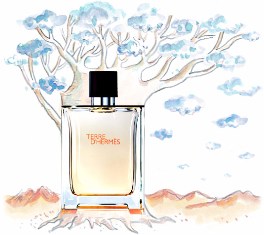
My favorite vetiver scents are an Indian attar of tuberose/vetiver, Lalique’s Encre Noir (the guy’s version), and the old standby, Guerlain’s Vetiver. Serge Lutens also makes a lovely vetiver potion, and Hove’ Parfumeur in New Orleans has a whole line of the softer, southern US type of vetiver- they even sell the root bundles for your linen chests. They won’t tell me what variety of vetiver they are using, but I suspect it’s a proprietary blend….
What are your favorite vetiver perfumes, types of vetiver, or fractions/synthetics? And if you’re in Zones 8-10, have you ever thought of growing it yourself?? |
posted by Marina |
8:00 AM
20 comments


 Miracles do happen. One gloomy Monday you go to get your unexciting post and there is a surprise package in your mailbox. In the package is a sample of a fragrance so rare and so expensive, you thought you would never get to try it. When you crack open the vial, your hands tremble ever so slightly. You sniff reverently, gingerly…You have heard it was a “tremendous animalic vetiver” (Luca Turin), “the driest perfume of all time” (Roja Dove)… It smells dark and mysterious. Scent of something or someone eternal, complex, incomprehensible, of a twilight place beyond good and evil. Thus smelled Zarathustra.