Luckyscent
Fragrance X
Indiescents
First in Fragrance
99Perfume
ExcelsisUSA
Parfum1
My Photo
Name:
Location: New York, NY
© Copyright 2005-2011 Perfume-Smellin' Things
All rights reserved
Custom Search

Thursday, December 24, 2015

Come in from the cold: Winter and holiday offerings for 2015 from Aftelier Perfumes


By Donna


Mandy Aftel of Aftelier Perfumes has made a habit of delighting us just when we need it most, in the dreary days of winter. This season we are presented with a new perfume, a different version of another, and a long-awaited addition to her line of organic artisan teas.

All new for 2015 is Vanilla Smoke, which through some sleight of hand actually smells more like real smoke than many fragrances with synthetic ingredients; the effect comes from a special extract of Lapsang Souchong tea that has been smoked over pine wood. I have to admit that smoky perfumes and I do not always get along, and when I first put this on, I smelled just like Henri Bendel's Firewood candle – one of the best there is, but not something I would want to wear on my skin. Fortunately this effect subsided as it warmed up and the vanilla note began to expand. It is a decidedly non-foody Madagascar vanilla absolute, deep and dark and woody, the perfect mate for the smoke. The composition is wrapped in a veil of real ambergris, which acts as the binder to make the whole thing seamless and velvet-smooth and gives it extraordinary longevity. This new introduction is available in both eau de parfum and extrait; the latter is almost supernaturally rich and dense and a bit less smoky to my nose than the eau de parfum; it's a showcase for the vanilla and ambergris. Wear it for the most special of occasions; it stays close to the skin, but those who do get close will be mesmerized.

I tested the fabulous Bergamoss when it was launched in solid form, and now it is available as a liquid perfume for a limited time. I may even like it better in this formulation, if that is possible; it is opened up, sharp and distinctive, punched up with a shot of bitter-green the way I like my chypres, yet still imbued with the beauty of the florals and the marvelous essence of the aromatic flouve grass. The bergamot is very forward in this version, while the solid is softer and mossier, with some sweetness added from the creamy base itself. The eau de parfum is striking, exhilarating, and vibrant, the perfume equivalent of a beautiful woman in a daring green dress who turns heads the moment she enters a room. We are so very lucky to have American perfumers making real chypres at a time when European firms are hobbled by EU/IFRA restrictions - I say bring it on, and since this is a limited edition, get it while you can, it is superb.


And the tea – oh my, the tea! It has been two years since the launch of the original three perfumed teas from Aftelier, which are wonderful, and the new Orange & Cardamom black tea, using flavorings from Aftelier's wonderful Chef's Essences, was worth the wait. Cardamom is my favorite of all the sweet spices, but dosing is key; too little and it can be overpowered by other aromas, too much and its highly pitched woody character can do its own overwhelming. This is judged just right, blending the sharp brightness of cardamom with a sweet and inviting blood orange, which also happens to be one of my favorites so far from the Chef's Essences line. The tea itself is top shelf rolled black tea pearls of exceptional quality, of course. This is a treat for cold mornings curled up on the couch and relaxing, savoring every sip, and a worthy addition to the lineup.


Image credits: “Golden Smoke” wallpaper from 99wallpapers.net, art by T Glow. One of my favorite photos of actress Elizabeth Taylor, in a publicity shot from 1951's “A Place In The Sun.”
Disclosure: The samples of all the products in this review were sent to me by Aftelier Perfumes.

Labels: , , , , , ,

Sunday, August 02, 2015

A beacon of light in the gloom: Bergamoss solid perfume by Aftelier

By Donna


Recently I was thinking about why I like chypre fragrances so much. Obviously I love the way they smell, but apart from that, the true chypres all share a common thread; they clearly owe much of their character to natural materials, and in general those materials are of good quality. From the high opening note of bergamot through the floral heart and down into the base of resins and moss, they are grounded in nature. Whether it is the animalic elegance of Miss Dior, the wistfully rosy beauty of Houbigant's , Demi-Jour or the bitter-green oakmoss overdose of Jean-Louis Scherrer, the chypre structure in all its guises owes its integrity to things that can't be made in a laboratory. (Don't even get me started with the so-called “modern chypres” that were born of necessity out of restrictions on naturals.) As much as I appreciate contemporary perfumes made into abstract works of creative art with the use of aroma chemicals, those which are made with nothing but those lack heart and soul, like a computer-generated image of a “perfect woman” whose expression is a vacuous stare and whose face is boring in its eerie symmetry. For the real deal, I reach most often for my collection of vintage chypres, made before the days of nanny states, bureaucratic overreach and multinational detergent companies acquiring perfume houses.

Now we have another entry in the genre that could easily be a throwback vintage scent, but it's an all new fragrance called Bergamoss from Aftelier Perfumes, and it is only available in solid form. Mandy Aftel wanted to make a true chypre fragrance and decided that it would work best as a solid. After testing it, I cannot disagree; it's so good I want to slather it all over myself and live in it 24/7.

Bergamoss is 100% natural, like all Aftelier perfumes, and it has the true chypre building blocks but with some unexpected companions. The exhilarating top notes of bergamot and wild sweet orange are bright and uplifting, like sunlight knifing through a dense forest canopy to reach the ground below. As the perfume warms on skin, it opens up to reveal a dreamy, expansive heart featuring ripe peach and nutmeg, a combination I have not encountered before but of which I heartily approve. This pastoral effect is heightened by the use of a most rare material called flouve, which is an absolute of a sweet grass that has a heartbreakingly beautiful aromatic character and gives the the wearer the feeling of being in a broad, romantic meadow filled with waving midsummer grasses drying into hay and interwoven with scented wildflowers. Of course, the base has plenty of real oakmoss, the cornerstone of all true chypres, along with antique civet and coumarin, the latter of which enhances the impression of the flouve. I have to say that flouve is my new perfume crush – every time I wear this fragrance I smell something different in it, as there seems to be no end to its aromatic revelations. The solid formula adds yet another dimension, with its sensuous, luxuriant feel when applied to the skin.

Bergamoss has it all – it's refreshing, bright, sweet, floral, spicy, green (literally and figuratively so), mossy, earthy, rich, animalic and profound. Classic perfume lovers rejoice; the art of the chypre is not lost, it's just living in the small studios of artisan perfumers who are keeping the flame burning.


Image credit: “Enchanted Forest” from hdwallpapersos.com
Disclosure: My testing sample was given to me by Aftelier Perfumes.

Labels: , , , ,

Wednesday, December 26, 2012

The Golden Season: A Holiday Trio from Aftelier Perfumes


By Donna

Aftelier Perfumes has launched two special new products for Holiday 2012, coming close on the heels of her new perfume launch, and after testing all three of them I can state with confidence that you just can’t go wrong whether you give one of them as a gift or if you are lucky enough to be the recipient.

Not long ago I reviewed the wonderful Oud Luban, a welcome all-natural addition to the dizzying array of oud-based fragrances that are so popular now. Smelling neither overtly medicinal nor harsh as some synthetic ouds can be, it is a warm and radiant fragrance, and a great introduction to oud scents for the timid among us. The Extrait version, which really knocked my socks off, is now available. It is hypnotically redolent and incredibly smooth. Even in this highly concentrated formula, it is better mannered than many oud perfumes and the use of elemi, blood orange and orange terpenes in contrast with the oud works like a charm, creating both a delicious citrus opening and a saffron-like effect as the scent develops on the skin. It would be an ideal special occasion fragrance for men, but women will love it too, as I do.

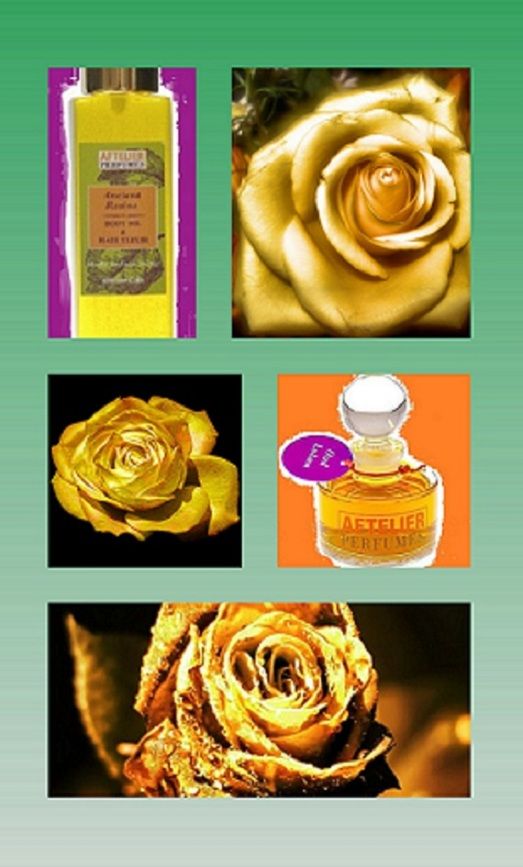
Mandy Aftel started making her Ancient Resins Body Oil & Hair Elixir especially for a certain Mr. Leonard Cohen, who uses it as hair oil and is never without it. Now the rest of us can experience this wonderful product, which is a subtly scented oil that softens the skin, smoothes the hair and adds a touch of fragrance to the daily grooming routine. It is a simple composition of frankincense, balm of Gilead, benzoin, elemi and labdanum, in a rich base of jojoba and coconut oils. It is rich without being too sweet, soothing without being greasy, and easily suited to either women or men. It is quickly absorbed and its moisturizing benefits last all day, so it is ideal for winter use. This elixir, which is also available in several other holiday-worthy scents such as Chocolate & Saffron and Pear, Fir & Coffee, is among the most affordable in the Aftelier lineup, which means you can give it as a gift and keep one (or more) for yourself.

It might seem strange that Wild Roses is the first rose perfume from Aftelier; the line has fragrances of almost every style you can think of, and not having a perfume that highlights the Queen of Flowers might seem to be a major gap in the line. Fear not, for it was worth the wait. Wild Roses is a rose scent like no other, rich and resplendent, and saturated with the intensity of three different rose essences, spices, apricot, tarragon and other herbs, in base of vanilla absolute, indole and aged patchouli. Mandy took her inspiration from the experience of walking around her own garden and smelling all the roses there. It does not capture the aroma of any particular kind of rose, but it does remind me of several of my own favorites – the rich, sleepy muskiness of the old  Hybrid Musk ‘Buff Beauty’ which, unlike most roses, gives its perfume freely to the warm summer air; the astonishing David Austin English Rose ‘Jude the Obscure’  with its nearly tropical mélange of  fruity notes; and most of all, the modern Romantica rose ‘Comtesse de Provence,’ in whose deep coral petals lies the delightful surprise of sweet apricots bursting with ripeness. I can’t tell you how often I have inhaled the scent of this delicious rose and thought to myself how wonderful it would be to have a perfume that captures it. Well, now there is one! Wild Roses is a fantasy rose perfume, and its evocation of a bigger than life, languid rose fragrance is the kind of flower one dreams of in deepest winter, a golden talisman to cling to when the garden is nothing but lifeless black branches and barrenness. It is the hazy anticipation of summer that keeps us going when our only garden pleasure is looking at catalogues and gazing inward with the mind’s eye at our ideal garden - yes, this year it will be perfect, just the way we want it, glowing with color and filled with fragrant blossoms and glistening fruits. Whether the Eau de Parfum or the simply stupefying Extrait is selected, this marvelous perfume will warm anyone’s summer-starved heart.


Image credit: Collage by Donna, using various images from the Web and aftelier.com

Disclosure: Aftelier Perfumes sent me the samples of the above products for testing.

Labels: ,

Tuesday, May 15, 2012

Everything Old is New Again: Sepia & Haute Claire by Aftelier Perfumes

By Donna


Two new fragrances from Mandy Aftel of Aftelier Perfumes have captivated me recently. The most recent launch intrigued me as soon as I learned of it because of the idea behind its creation. Mandy Aftel has long been fascinated with the old abandoned ghost towns of California, and her goal was to create a perfume that captured the essence of the dusty old buildings slowly returning to the earth and their sense of history. This concept really spoke to me, since I grew up in northern New England, where historic buildings are everywhere, and I have always loved old wooden barns, both for the way they look and their wonderful smells; the sweetness of hay and straw, an echo of the animals that once lived in them, the smell of old farm machinery, and of course the ancient wood itself, aging to silver grey and bearing witness to decades or even centuries of hard use. Sepia is a loving tribute to artifacts like these, their usefulness long gone, but still they stand and gradually wear away in the elements until their ancient beams finally give way, their shabby beauty living only in faded photographs. This is not the sort of thing that comes to mind when most people think of making a fragrance, but then Mandy is not most people.

Sepia teases the nose at first with bright notes of mandarin and grapefruit, which quickly segue into the amazingly rich aroma of blood cedar, from the heartwood of the tree. Cedar can sometimes go very wrong on my skin and get harsh and sharp, or smell like pencil shavings, but this is nothing like that; it’s nothing short of majestic in its deep and vibrant character. It then does a slow fade, but I don’t mean that in a bad way, because this perfume has really good longevity. It simply ages, just like a weathered building, but in a time-lapse span of minutes instead of years. The heart notes of florals, coffee, cocoa and strawberry act to mute the woodiness of the cedar, and then its voice is further deepened by base notes which include tobacco flower, cépes (mushroom) labdanum, ambergris, oud and indole, the latter two of which adds a truly authentic element to the fragrance, a faint aura of decay or perhaps the trace of muskiness left behind by a wild animal who found shelter in an abandoned shack. I tested the Eau de Parfum, so I can only imagine the depth of the pure perfume version. Either way it’s a wonderful fragrance for either men or women to wear.

Of course, Sepia does not actually smell like an old wooden building, it’s a real perfume, not a novelty act. However, if it did, it would be an idealized version of one, constructed from the most beautiful vintage wood and looking impossibly romantic. The best barns in the world (in my admittedly biased opinion) are in Vermont at the historic Shelburne Farms, and I have long coveted them, especially the majestic Farm Barn. Smelling Sepia, I can close my eyes and imagine I am there, with sunlight streaming in through its high windows, every inch of its elegant structure in perfect harmony with its surroundings and the sweet aromas of old wood, hay and contented animals lingering in the still air.

 I had missed out on trying Haute Claire when it was first released, but I was fascinated by the story of its development, as documented by the “Letters to a Fellow Perfumer” series hosted on Nathan Branch’s blog. (Sepia’s development was also documented in this series, with perfumer Laurie Erickson of Sonoma Scent Studio.) Mandy and Liz Zorn of Soivohle Perfumes were both involved in sharing their creative process of making a perfume that contained both galbanum and ylang ylang, which was a tricky proposition as these two notes are not often found together; galbanum is sharp, green and icy cold while ylang ylang is a soft tropical floral with an almond-like sweetness. How could a wearable perfume be constructed using such disparate materials? I have not tried Liz Zorn’s fragrance, but I can attest to the fact that Mandy really pulled it off here.

Haute Claire opens with a buoyant greenness and the galbanum is immediately apparent, although not as sharp and dominant as it is in many other fragrances, and it’s joined by zesty lime and orange. There is a hint of floral sweetness which steadily unfolds until it seems that the rich, hazy ylang ylang and sweet honeysuckle is overwhelming the top notes and taking over the place. Yet there still remains an extension of the opening because of the presence of clary sage and vetiver, so the transition is seamless all the way down. I will be the first to admit that clary sage can be problematic, since I have grown it in my own garden, and its pungent herbal intensity can be a bit much in close quarters, but it is well tamed here and adds a lively character to the mix. I imagine that pairing it up with ylang ylang and the vanilla in the base was as much of a tightrope act for the perfumer as the galbanum. (Indeed, the very name of this fragrance is taken from the ancient Song of Roland, as it is the name of the sword of the character Olivier, said to have had a golden hilt embedded with crystal. This fragrance rides the fine edge of balance and makes it look easy, though surely it was not.)

Haute Claire has amazing tenacity too, and it’s still going strong twelve or more hours later, by which time the rich vanilla and floral notes have become as one, lightly leavened with vetiver and fused to the skin. At this point it seems a shame to have to bathe and take it off since it is so beautiful in the far drydown, so the only sensible thing to do is apply it again the next day and repeat the process.


Image credit: the beautiful Farm Barn complex at Shelburne Farms in Shelburne, Vermont via origamidon’s flickr photostream by Creative Commons license, some rights reserved.

Disclosure: The perfumes samples were sent to me for testing at my request by Mandy Aftel. The fragrances are available for purchase at www.aftelier.com .

Labels: ,

Tuesday, January 31, 2012

Natural Nuances: Aftelier Perfumes Secret Garden and Oud Luban

By Donna

As I lamented in my recent post on the demise of classic floral bouquet scents in mainstream perfumery, they just don’t make them like they used to -unless “they” are a natural perfumer with the talent to bring forth all the best of the essences they have to work with. One need look no further than Mandy Aftel of Aftelier Perfumes to find such a gem, because the recently launched Secret Garden exemplifies what can be accomplished with the right balance of ingredients. This gorgeous fragrance was inspired by the famous book (and ensuing films) by Frances Hodgson Burnett of the same name centered on a neglected walled garden on a somber English estate that is found by two children who secretly bring it back to glorious life after a long-ago tragedy; the garden heals all who enter it both by virtue of the hard labor involved in its restoration and the rich beauty it reveals in return. This perfume is a fitting tribute to resurgent life, as I cannot imagine anything more lush and inviting.
When I first smelled Secret Garden, it immediately reminded me of several of my favorite vintage fragrances, and in the best possible way; the luscious, languid florals of Lanvin My Sin, Corday Fame and Blanchard Jealousy and a touch of the fruity mystery of Rochas Femme greeted my nose, and just dabbing it on made me feel as though I had suddenly developed an hourglass figure accentuated by back-seamed silk stockings. A shadow of the balsamic Oriental warmth of a Shalimar, or even Dana’s Tabu the way it once was in its glory days, adds depth and interest. (This is no mystery - it has civet and castoreum in it to give it that irresistible sex-in-a-bottle vibe, just like those great old classics did.) At the same time, it is an exceptionally beautiful modern floral perfume, with top notes of bergamot, geranium and blood orange and a heart of raspberry, jasmine sambac, blue lotus and Turkish rose absolute. The florals blend in a superbly balanced way so that no one note is predominant, and the result is heady and almost narcotic. Vanilla, benzoin and aged patchouli complete the delicious and expansive base, which also includes a truly novel ingredient called deer tongue, a botanical essence that imparts a warm powdery feeling similar to Tonka bean to the composition. The drydown lingers for many beautiful hours thanks to the complex base materials. For fans of the floral Oriental style of scent, this is a superb must-try example of the genre.

Another recent introduction from Aftelier is Oud Luban. I will not go into great detail on this one because I simply can’t compete with Beth’s description of it for her contribution to The Clarimonde Project. It is warm, smoky, leathery and subtly spicy, and the splendid high quality oud is of course entirely natural and blended with an exceptionally fine grade of frankincense known as Luban. I have a sample of the solid version, and as Aftelier fans know, Mandy’s solid scents are among the best in the business. I would recommend that oud fans keep some of this around of it for reference purposes as well as to wear, because this is what high grade natural oud perfume is supposed to smell like. With oud’s still-burgeoning popularity, several synthetic substitutes have been developed since the real thing is so expensive, at least for the good stuff; cheaper natural materials that might not exactly be real oud are finding their way into perfumes as everyone jumps on the bandwagon. If you want to go right to the source, as they say, you can’t go wrong with Oud Luban.

Image credit: “Secret Garden” gate from ARendle’s flickr photostream via Creative Commons Share Alike license, some rights reserved.

Disclosure: The samples were sent to me by Aftelier Perfumes at my request for testing.

Labels: ,

Friday, November 11, 2011

An Aftelier Perfumes Experience: At Home on the Range (Part Two)

By Donna

This is the second and final installment in my reviews of a selection of the Aftelier perfumes by Mandy Aftel. Part one can be found here. In this part I explore the broad range of the perfumer’s talents, from lush floral to classic cologne to Oriental fantasy and more. Her creativity in putting perfume elements together in new ways is truly impressive.

Perfumer, author, artist, flavorist, innovator, and gifted communicator Mandy Aftel has been busy breaking down the barriers between indie/niche perfumery and the “big boys” for some time now, and her work has been instrumental in the recognition of natural perfumery as an art worthy of the respect that the classic perfume houses and luxury brands have always enjoyed in the modern era. Before I began testing the fragrances in earnest, I read her groundbreaking book Essence and Alchemy, which not only explains many of the technical aspects of perfumery for the layperson, but illuminates her own creative process and how the lessons of the past are interwoven with modern techniques. My understanding of the perfumery process was increased exponentially and I recommend this book very highly.

One of the fragrances I have been testing is a solid version, this one called Orchid. Its name is a little misleading as it was actually inspired by the lush scent of Oriental lilies, a favorite of Mandy’s and which also happens to be my own favorite floral aroma; I have grown lilies for many years and I just can’t get enough of their intoxicating aroma. Lily is hard to re-create in perfumes, because like many other flowers, no natural extract currently exists, so the olfactory impression must be created by blending other elements. This one somehow manages to smell very much like lily using orange blossom and other ingredients and captures that oddly rubbery, humid character that many lilies have which makes them smell “tropical” even though they are not, and in fact some scented orchids have this quality as well. I was delighted to discover that I shared a favorite flower scent with Mandy and she has done a wonderful job of capturing the fragrance I love so much. As an added bonus, her solid perfumes are made with jojoba oil and beeswax, which impart their own richness to the mix.

Another sweet, rich fragrance in the Aftelier line is Fig and it’s not like most other fig perfumes I have smelled; no green, leafy astringency here, this is the fragrance of sweet, syrupy fruits, meltingly soft and ripe. It reminds me of a favorite treat when I was a child – growing up in New England, fresh figs were simply unheard of and they were only available dried on a string or in cans and I loved those canned Kadota figs in heavy syrup. They were far too sugary of course but I always had a sweet tooth, and this Fig perfume has the delicious “figginess” without the sugar overload. Now for the big surprise: There is no fig in it at all! As with lily, no natural perfumery essence exists, so it is magically impersonated here by a blend of yuzu, jasmine sambac, grand fir absolute and a type of “fruity” Spanish lavender. I have no idea how this was accomplished but I am highly in favor of it. It’s not just a one-note scent of course, it’s a real perfume with depth and longevity, and the Africa stone in the base adds another layer of complexity to this seductive and succulent gourmand perfume. Most fig scents are cool and meant for summer wear, but this one is perfect for fall and winter.

One of the samples I requested was way out of my comfort zone, as I was interested in exploring Mandy’s range; was there anything she could not do? Apparently not, as I found Shiso to be very wearable even though on paper it is miles away from what I usually like. Now this one does have considerable astringency, and pungent is the word for it. The herb Shiso is also known as perilla and is a sharply flavored plant in the mint family that’s used as a culinary accent and in herbal tonics as well as in fragrances. This piquant note is matched perfectly with a brisk green pepper note to start, but it mellows fairly quickly on skin, and what this really ends up to be is an excellent eau de cologne style fragrance, with the shiso standing in for the more traditional herbal notes like rosemary or Artemisia that might be used in a classic cologne blend. A touch of clove and agarwood (oud) in the base gives it warmth and solidity. It’s still not “my thing” but I liked it a lot, much to my surprise, although I think it might smell better on a man than it did on me.

Parfum de Maroc begins as a classic Oriental “spice market” fragrance and is another one that rewards patience. It opens with a dense, murky chunkiness, as so many naturals do, that makes you think it’s going off in a Yankee Candle Ye Olde Potpourri direction but of course this is Mandy we are talking about, so just wait a little while; it gradually becomes infused with light and by the time the drydown arrives it glows from within. I thought of that antiquities shop in the movie Raiders of the Lost Ark once it had fully developed; the scent of an Eastern marketplace in sepia shades, and a mysterious darkened room full of secrets surrounded by the brilliant desert light outside. It has considerable depth but somehow loses weight as time goes on, which is a pretty neat trick for a perfume in this genre. Some of my favorite spicy notes are here including black pepper, nutmeg, saffron, and cardamom but no one of them dominates and even the usually assertive nutmeg is woven into the mix with a light touch. Turkish rose at the heart provides the perfect backdrop, and sticks around to partner with the gorgeous and luminous myrrh in the base. Much pressing of nose to skin ensued during my testing of Parfum de Maroc and it ended up being one of my favorites of the bunch.

The grand finale is Mandy’s very special Parfum Privé, which she made for herself and then decided to share it with others, luckily for us. It was made with a no-holds-barred approach when the perfumer acquired some real ambergris, which is an almost unheard of luxury these days. The concept behind this floral Oriental perfume is to smell like the night air in Hawaii, a place I have never been, but if it smells anything like this please book me a flight today. To my nose it is all about the osmanthus flower, also a very pricey ingredient, but it’s a dark and haunting version of that tiny blossom that can be so lighthearted in other fragrances. Even the addition of the best orange flower absolute does not make this a sunny scent for me, because the base of earthy opoponax, vintage sandalwood, ambrette seed and ambergris deepens the tone and gives it more heft than any other osmanthus fragrance I have smelled. (I am a fan of Serge Lutens’ sheer and delicate ode to osmanthus, Nuit de Cellophane, but Parfum Privé is the one that really deserves to have “nuit” in its name.) If this is how ambergris transforms a perfume, now I know why it is so highly prized. I can just imagine an evening breeze carrying the fragrance of night-blooming flowers, yet also bringing the ripe scent of vegetation just on the verge of decay, a reminder of how quickly plants grow, bloom, die and are reborn over and over in a tropical climate. This perfume has no rough edges; just a fecund smoothness that melds perfectly with skin and the final drydown reveals the full beauty of the ambergris. This would be a real treat to have for special occasions, especially romantic ones, since it is so soft and sensuous. It’s way out of my price range, but I am very happy to have had the opportunity to smell this wonderful composition and I recommend that anyone who thinks that natural perfumes can’t be great should try it.

Disclosure: The perfumes I sampled were given to me for testing by Mandy Aftel at my request.

Image credit: Glowing sky over field image from free-background-wallpapers.com

Labels: ,

Tuesday, October 25, 2011

An Aftelier Perfumes Experience: Virtuosity Meets Alchemy (Part One)

By Donna

I finally know what all the excitement about Aftelier Perfumes is all about. Yes, I am late to the party but hey, parties don’t get interesting until they are well underway, right? After having tested a wide range of Mandy Aftel’s wonderful natural perfumes, I know why she has garnered so much attention, including a Fifi Awards nomination in 2011 for her masterful Honey Blossom scent.

Perfumer, author, artist, flavorist, innovator, and gifted communicator Mandy Aftel has been busy breaking down the barriers between indie/niche perfumery and the “big boys” for some time now, and her work has been instrumental in the recognition of natural perfumery as an art worthy of the respect that the classic perfume houses and luxury brands have always enjoyed in the modern era. Before I began testing the fragrances in earnest, I read her groundbreaking book Essence and Alchemy, which not only explains many of the technical aspects of perfumery for the layperson, but illuminates her own creative process and how the lessons of the past are interwoven with modern techniques. My understanding of the perfumery process was increased exponentially and I recommend this book very highly.

Of course I had to sample the famous Honey Blossom, and it did not disappoint, but it was not what I had been expecting at all. Unlike some other honey-based perfumes such as Ginestet’s Botrytis or Roxana Villa’s To Bee, it has virtually no highly pitched sweet notes; it is a cello versus violins, and only Serge Lutens’ honey monster Miel de Bois has as deep a voice. However, neither is it as funky and heavy as the Lutens, instead opting for a quiet depth that slowly becomes apparent, after a start that was curiously flat on my skin, with a smell almost like wet Kraft paper or cardboard; this turned out to be mimosa and linden, and both of them softened up after the strange beginning. (Mimosa in perfume has always been problematic for me, since unlike most florals it does not have much “lift” on its own and it needs help in that regard.) My patience rewarded with a slow, stealthy development that culminated in a richly dark honey scent that lasted for hours. A base of ambergris and benzoin helped in that regard, and since ambergris is very rarely encountered in modern perfumery; that was a rare treat indeed. Once it settled in for the long haul I could not stop smelling myself; to me it evokes chamber music played in a Victorian parlor with the late afternoon sun slanting in and the beeswax smell of polished furniture in the air. I love honey in perfume anyway (yes, even Miel de Bois!), and I can see why it has garnered so much attention.

Smelling the enigmatic Lumiére reminded me of a friend of mine who was trying to describe a wildly multi-colored garment by posing this question, and the only possible answer: “What color is it?” “Yes.” Lumiére is multifaceted and ever-changing on my skin, and I can’t even begin to pin down what category to put it in. Is it green? Is it floral? Is it fruity? Is it musky? Is it incense? Is it sharp? Is it soft? The answer to all is, of course, yes. Who ever heard of putting green tea, lotus flower and frankincense in the same perfume? And does it actually work? Well, yes, and spectacularly. The jangle of competing sensations at the beginning gradually composes itself into some thing truly beautiful, described by Mandy as feeling like fine silk on skin, but it’s a silk with a bit of raw roughness to it, shantung rather than charmeuse. At its heart is a splendid bouquet of lotus, honeysuckle and boronia flower, and remember that all of these are naturals, so you can just imagine how good it is; no weirdly aquatic “lotus” approximation in this juice, it’s the real thing. Having tested it several times, what I am coming up with at each wearing is that it’s a smell that slowly transforms into a perfume, if that makes any sense. Of all Mandy’s perfumes I have tried, to me this was the one that best illustrated the importance of the great Edmond Roudnitska’s principle of duration as an essential component of perfumery, as explained in Mandy’s book, since without it the artistry and structure of the fragrance cannot be experienced to the fullest degree. Once Lumiére has reached its final destination, it is both gorgeous and compelling and well worth the journey of getting there.

The first Aftelier fragrance I ever heard of was probably Cépes and Tuberose, and at long last I got to smell it. This is probably the one that put Mandy Aftel on the map, so to speak, and now I know why. The idea of putting mushrooms (cépes) and tuberose in the same perfume seems truly weird, until you think about it a little; there is some overlap in the lower register of their respective aromatic profiles, since tuberose has some pretty funky, fleshy, earthy undertones that become even more apparent when it is concentrated into a concrete or absolute, so pairing it up with porcini mushrooms almost seems like a natural progression, but of course it’s one of those “why didn’t I think of that” ideas that only seems blindingly obvious after someone creative has actually done it. The really amazing thing about it is how it does not really smell like either one of these things. This is where the alchemy part comes in; something entirely new is created by the fusion of two disparate elements. This is no novelty trick, but a beautifully wearable fragrance that keeps me riveted with a sweet, almost confectionary character, almost like rich chocolate with cream and fruit. Rosewood, Moroccan rose and benzoin contribute to this composition, but nothing else really accounts for the overall effect save the interaction between the mushroom and tuberose, resulting in a musky and highly sensuous experience like no other. It is light years away from any other tuberose perfume yet its languid sexiness fits right in with most people’s expectation of what a tuberose fragrance “should” be. The mushroom contributes its earthiness without actually revealing the secret of its identity to anyone who might smell it without knowing what it is. I don’t think I am going out on a limb to say that this is a masterpiece.

Speaking of unexpected, the lovely floral Pink Lotus was a nice surprise; unlike Lumiére, where the floral notes are sheer and evanescent, the lotus in this one is rich and “retro” with a solid mossy base like a Fifties classic once it develops, and I really liked it a lot. It put me in mind of such womanly vintage scents as Blanchard Jealousy or Corday Fame, with an added flourish of modern freshness. Unfortunately, this beauty is being discontinued, so if you want some, better hurry. In my next review of this line, I will talk about some more of these highly original fragrances.

Disclosure: The perfumes I sampled were given to me for testing by Mandy Aftel at my request.

Image credit: Purple glowing mushroom image wallpaper from topandroid.com

Labels: ,

Wednesday, May 25, 2011

Ode to Some Yellow Flowers: Honey Blossom by Mandy Aftel

By Marina

Ordinarily I think of mimosa and linden as of ethereal flowers...not quite of this lowly world. There is something in the airy, frail transparency of their aroma that lends itself to this kind of almost angelic imagery. Mandy Aftel's Honey Blossom certainly retains that non-corporeal quality of the flowers...it does however place their feat firmly on the ground. Roots them in the ground even.

The perfumer brings out a certain edible quality from linden, a certain almost doughy, crumbly feel. She infuses the yellow mimosa with even more life, juiciness and color by adding orange blossom to the blend. She makes the mix appear soft, warm and sensual by using benzoin. And most importantly she lets ambergris bring out the animal in the delicate flowers, making the fragile petals smells unexpectedly dirty, earthy and human, only too human.

"We are and will be dust.

Not air, not fire, nor water
but
earth,
only earth
we will be
and maybe also
some yellow flowers."
(Pablo Neruda)

Available at aftelier.com, $45.00-$150.00.

Image source, Corbis.

Labels:

Wednesday, February 09, 2011

Umami in Perfume. Cepes & Tuberose by Aftelier

By Marina

This week I want to talk about mushrooms, in their a) edible, b) elegant and c) earthy incarnations in perfume. Why mushrooms, you might ask? Because it is boring to live on the "same old, same old diet" of familiar notes. The food industry figured out a while ago that a certain something apart from sweet, sour, bitter and salty is needed to create tasty dishes, and perfumery should branch out too. An ingredient that sounds odd on paper, will smell sublime on skin. There must have been a time when an average consumer would have balked at the idea of putting on an oil that came from a tree infected by a fungus, but nowadays Bath & Body Works add oud to their bestselling scents.

The "certain something" food industry embraced is, of course, umami, the meaty, savory, "tongue-coating" 5th taste, found in seafood, meat (especially cured), tomatoes, soybeans, carrots, Chinese cabbage, sweet potatoes, truffles, soy sauce, green tea, Parmesan cheese and, of course, mushrooms. To be fair, perfumers have been offering us umami for a while also to a certain degree, be it unintentionally or on purpose. Think about Hilde Soliani Stecca or CB I Hate Perfume Memory of Kindness  (tomatoes); Maitre Parfumeur et Gantier Eau des Iles (smoky, cured meat); Honore des Pres I Love Les Carrotes (self-explanatory); Alan Cumming Cumming, Tom Ford Black Orchid and Editions de Parfums Une Rose (truffles). Some gardenia scents, most prominently JAR Jardenia, can smell of (Parmesan) cheese and mushrooms, and myrrh has a mushroom-like undertone as well (Serge Lutens La Myrrhe, Annick Goutal Myrrhe Ardente). Apart from Mandy Aftel's Cepes & Tuberose, there are several other fragrances which actually declare mushrooms as one of the notes, namely Ermite from The Perfumer Movie Coffret, CB I Hate Perfume Wild Hunt, Kiehl's Forest Rain, Dawn Spencer Hurwitz Cuir et Champignon and Providence Perfume Co. Indolice.

As I mentioned above, gardenias have a certain raw, soil-like quality. Until I smelled Aftel's version, I had never noticed that aspect in tuberose. Mandy Aftel told me that she herself hadn't realized that "there was a rich earthy communality between the two aromas" until she smelled cepes and tuberose together. She of course, knew about this facet of the smell of cepes, but was "quite surprised to find a place in the tuberose absolute that linked to this facet of the aroma."

Smelled on its own, tuberose absolute is as I know it, buttery, slightly mentholated and slightly rubbery. Smelled on its own, cepes absolute smells of soy sauce and red wine, a mouthwatering, "tongue-coating", savory aroma. Smelled right after cepes, tuberose suddenly turns to me with a facet it hasn't shown before ... there is something in fact meaty there ... meaty and dry and coated in earth...a certain piquant pungency that it took a mushroom to bring to light...or darkness, as it were.

The composition of Cepes & Tuberose is uncluttered. The two main ingredients are so rich, complex and charismatic, that any other notes have to be "quite simple. The cepes and the tuberose intertwined was all the star material that the perfume could aesthetically accommodate." (M.Aftel) A little bit of citrus in the top notes brightens the fleshy dark brown of the blend; woods seem to both enhance the creaminess of tuberose and to add to the dry spiciness of porcini. This is undoubtedly one of the most unique tuberose perfumes - and much more than a tuberose perfume. It seems wrong to categorize it as a floral. But neither is it anything else really. It requires a new olfactory category of its own ... Umami.

Available at Aftelier.com, $45.00-$300.00, depending on the size, $6 for a sample. While you are there, do order a little bit of Cepes absolute too ($35.00 for 1/6oz).

Labels: , , , ,

Friday, December 24, 2010

Candide by Aftelier Perfumes


By Marina

Candide was named after the eponymous novel by Voltaire, which, according to Aftelier, has a theme of optimism. Interestingly, optimism is in fact dismissed in the book, and it has been debated by students of Voltaire's work, which philosophy the novel does advocate. Regardless of the name, there is a brightness in Candide the perfume, which in fact gives a wearer a sense of...maybe not optimism...perhaps a certain melancholy upliftedness. One really shouldn't expect any higher degree of positivity from an incense scent.

On my skin, frankincense is the dominant note (well, it is 50% incense, on me, 30% jasmine, 17% citruses and 3% spices, to be exact), and perhaps that is why the wonderful yellow brilliance of citruses and jasmine shines as if through a veil. The perfume might be a smile, but the one that shyly appears after many tears. Or another image...and I know that I am awfully unoriginal in equating incense with "church"...sun shining though a stained window of a cathedral, dust trembling, illuminated by this straight line of light...the sun can't get through to all the dark corners, but it gives a certain sense of hopefulness...Without shadows, there wouldn't be light, without having gone through hell, we wouldn't know how happy we are...When a contrast in a perfume is done right, like in Candide, it works wonders not only on skin but also with wearer's emotions and imagination.

And how harmonious is the composition! Dark frankincense juxtaposed with luminous grapefruit and orange, softened with sweet jasmine petals, sprinkled with a little bit of spice...Elegance of simplicity and a little bit of perfumer's magic...A perfect perfume for the Holidays...

Merry Christmas to all who celebrate!

Candide is available at aftelier.com, $45.00-$175.00.

Image source, colin200 on flickr.com.

Labels: , ,

Friday, December 17, 2010

Parfum de Maroc by Aftelier

By Marina

To me, Parfum de Maroc showcases the characteristic that I came to love in Aftelier Perfumes and to recognize as a specifically Afterlier quality. I call it spicy booziness...There is something in each of my favorite Mandy Aftel's scents that has a mouthwatering, nose-tingling quality of a very piquant hard liquor...something dangerously drinkable...

Maroc has that intoxicating something in abundance. Its ripe rose is drunk on spices, fermented in cardamom, saffron and nutmeg...There is also galangal, which, Wikipedia informs me, has a "citrusy, piney, earthy aroma (...) its flavor is a complement to its relative ginger." It is supposed to be an aphrodisiac and, smelling Maroc, I believe it. The mix of roses, earth and spices has an aloof, dark sensuality that is irresistible.

I love when a perfume allows me to see itself in color. Parfum de Maroc does and it is flame-red. It has the texture of heavy raw silk, smooth and scratchy to the touch at the same time. Parfum de Maroc makes me restless, like beautiful things are often prone to do. I want to imprint it on my senses forever, to make my own, to drown in it...and it makes me anxious that this gorgeous orange-red silk will slip though my fingers....As Camus said (yes, it is a quote-Camus week on PST), "beauty is unbearable, drives us to despair, offering us for a minute the glimpse of an eternity that we should like to stretch out over the whole of time."

Available at aftelier.com, $45.00-$300.00.

Labels: , ,

Monday, July 06, 2009

Aftelier Lumiere: Perfume Review

As a rule, fragrances develop from light to heavy, from bright to dark. On my skin, Mandy Aftel's new fragrance, Lumiere, progresses in reverse.

Like a dimmer gradually being switched from dark to dusky to bright, the perfume slowly moves from the opaque, nocturnal-green notes of green tea absolute and incense in the direction of ever increasing incandescence. The composition steps out of the deep, cool, enveloping pool of myrtle green, wades through the translucent, pale waters of lotus and finally explodes in a burst of joyous, floral pinkness of boronia...A synesthesiac's delight!

Available at Aftelier and Henri Bendel, $195.00 for 1/4oz.

Image source, rodneysmith.com

Perfumer: Mandy Aftel.

Labels: ,

Friday, June 12, 2009

Aftelier Cassis: Perfume Review

In Russian, when something has started to ferment and turn into an alcoholic beverage, we say that it забродило (zabrodilo), literally -wandered off. The blackcurrant in Mandy Aftel's Cassis has definitely wandered off from the innocent dacha of my childhood and into places where my mama entreated me never to go.

Corrupted with rum, smoke and spice, this is not your granny's blackcurrant jam. Drunken, dissolute, debauched, this is currant gone bad, really, really bad. As always, when a note in perfume "goes bad", in a sense that it acquires this boozy, very ripe, husky quality, I go right after it. Aftelier's Cassis makes me think of an unknown liquor...which I would very much like to know...if rum was distilled from berries and not molasses, this is what it would smell like...add to that thick, piquant, sweet fragrance the aroma of old oak barrels...stored in a dark cellar...in a house of someone your mama wouldn't want you to know...and you have an idea of Aftelier Cassis.

To smell it for yourself, luckily (?) you don't have to visit mechant loup in his lair. Cassis is available at Aftelier.com, Henri Bendel, Blunda and Suendhaft, $150.00 for 1/4oz.

Image, by Carter Smith, is from art+commerce.

Labels: , , ,

Monday, August 18, 2008

Perfume Review: Aftelier Cognac

Cognac to me is the most comforting drink. It has a pleasantly numbing effect, it relaxes and soothes my invariably stressed mind like no other drink, prescriptive or non-prescriptive, does. Drinking from a pear-shaped snifter is akin to imbibing in the waters of Lethe, the river of forgetfulness. A perfume inspired by the eau-de-vie should therefore be a comfort scent extraordinaire, and in talented hands of Mandy Aftel it really is.

A cognac lover whose knowledge on the subject is much superior to mine, when asked if the way Aftelier creation smells can be compared to any actual cognac, thought that if the perfume was a drink it would have been the closest to Martell Creation. Having had a (very expensive) pleasure of tasting the said cognac, I understand the comparison made by the tres sophisticated friend of mine. The notes of ginger and candied orange zest that hit the palate on the first sniff (and the first taste) are utterly delicious. The ginger spikes up the silky aroma, and its zestiness is perfectly balanced by the nutty, oily accord that makes me think of very old wooden casks and mild curry. The effect is incredibly attractive, a complex, mellow, rich aroma that is warming and refreshing at the same time, a blend that is simultaneously sensual and tranquil.

Aftelier Cognac is available at aftelier.com and Henri Bendel, $150.00 for 7ml. Martell Creation can be found at various wine merchants for around $300 for 750ml.

Labels: , ,